Fjord Villages in Norway — A Different Way to Live
From maritime industry hubs to hamlets of seventy — life along the fjords is as varied as the landscape
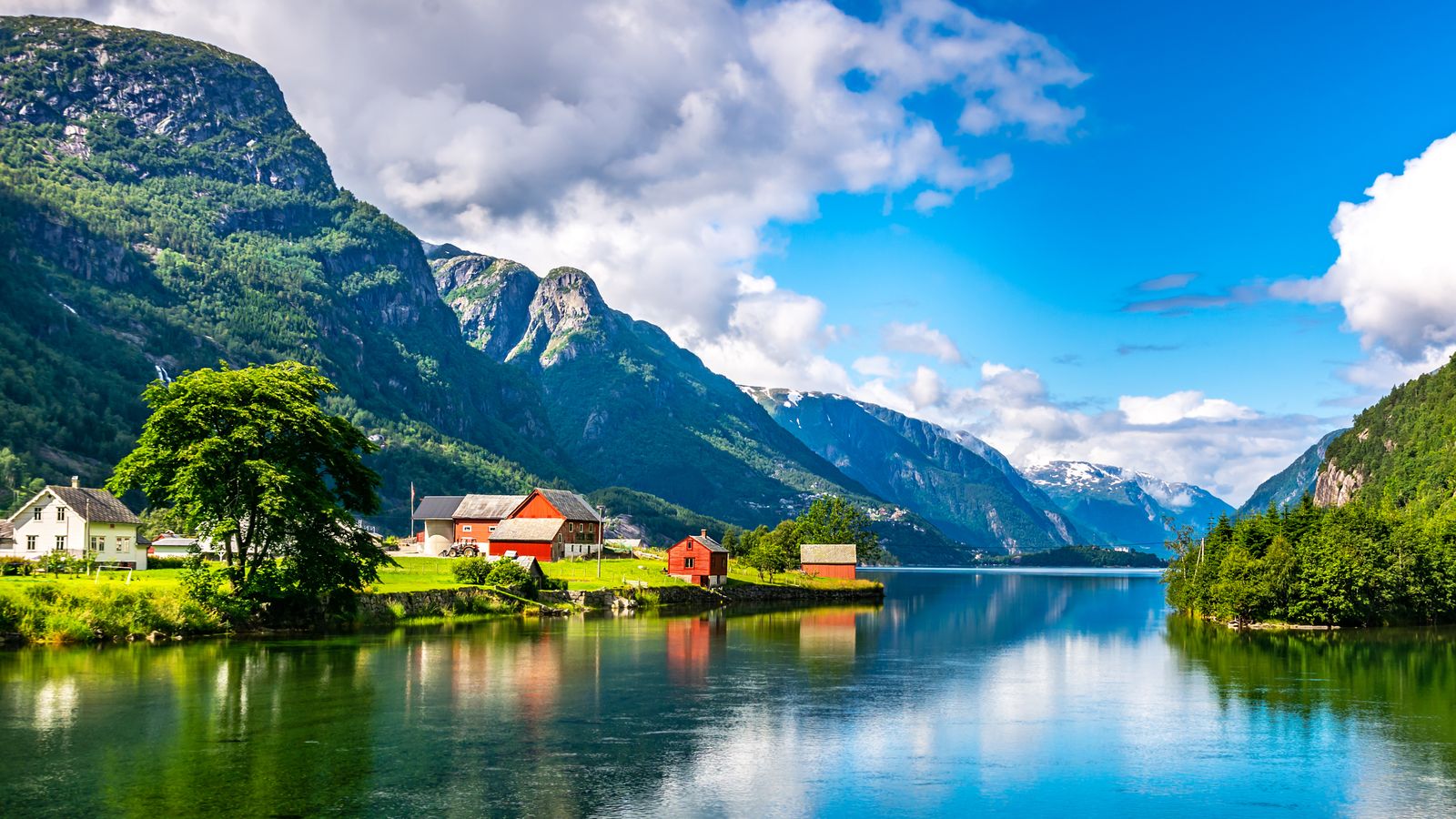
The Norwegian fjord is one of the most recognised landscapes on earth. But the postcard version, all towering cliffs and still water and a lone kayak, tells only part of the story. Along these waterways, real communities have shaped their lives around the fjord for centuries. Some build ships. Some grow apples. Some run the world’s northernmost dairy farm. What they share is a relationship with the water that is less about scenery and more about everyday life.
What Makes a Fjord Village
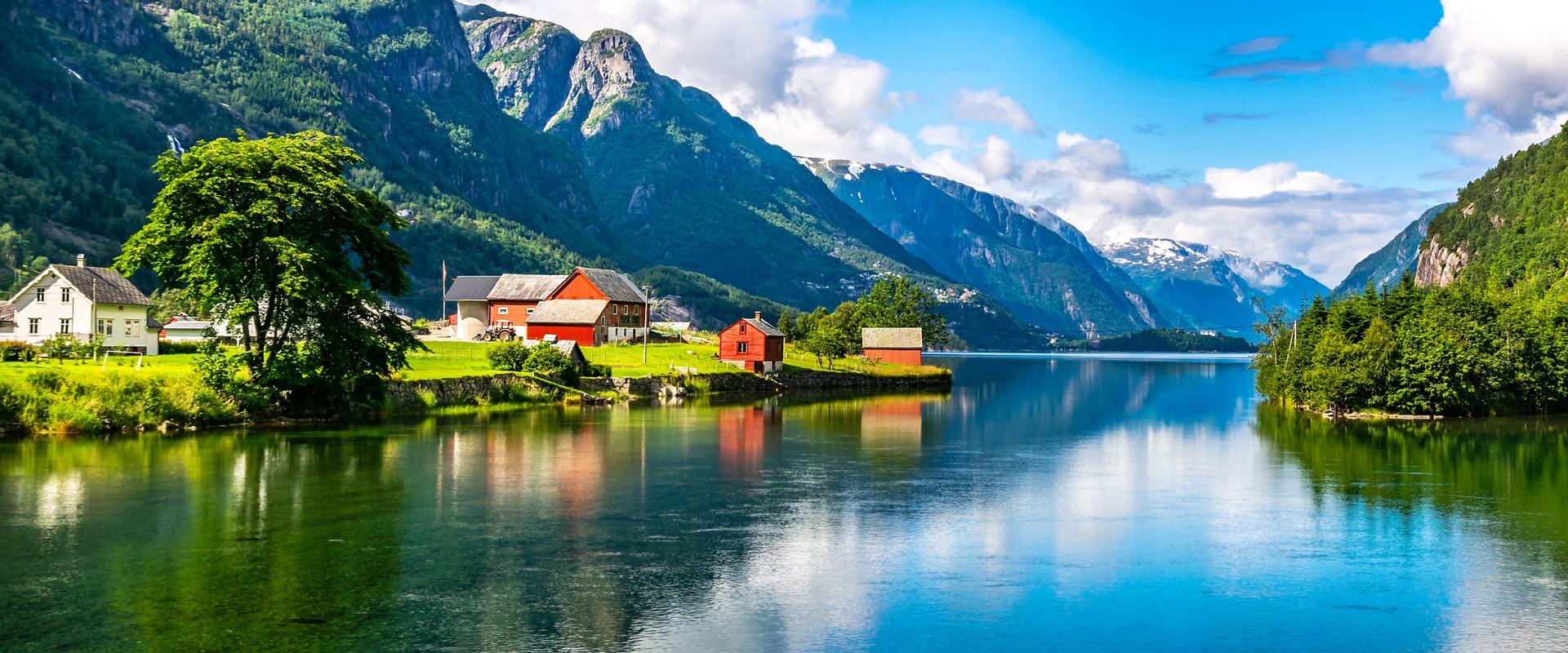
A fjord is a long, narrow inlet carved by glaciers during the ice ages, often flanked by steep mountains that drop straight into deep water. In Norway, fjords stretch from the southern coast to the Arctic, and along their shores, villages have grown up where the geography allowed it: on flat ground by the waterline, at the head of a valley, or on a sheltered ledge above the tide.
These are not suburbs. A fjord village might have seventy inhabitants or two and a half thousand. What defines them is the proximity to the water and the mountains, and the way that proximity shapes daily life. The fjord is a commute route, a fishing ground, a swimming spot on summer evenings, and sometimes the reason why a global shipyard chose to set up here rather than anywhere else.
Most fjord villages are small enough that people know each other. Many have a single school, one grocery store, and a volunteer-run sports club that somehow fields teams in football, cross-country skiing, and brass band all at once. The trade-off for limited urban amenities is space, silence, and a landscape that changes with every shift of light.
Different Fjords, Different Lives
There is no single template for fjord life. The character of each village is shaped by its particular fjord, its history, and the people who live there.
Where Ships Shape Communities
Along the Sunnmøre and Romsdal coasts of western Norway, a cluster of fjord villages has built a global maritime industry. Brattvåg, Tomrefjord, and Tennfjord are all within an hour of each other, yet each has its own character.
Brattvåg, with around 2,500 residents, is the largest of the three. The village is home to one of VARD’s shipyards, where advanced specialty vessels are designed and built for customers around the world. Kongsberg Maritime also has a significant presence here, manufacturing winches and steering systems. Around 20 per cent of the village’s inhabitants come from abroad, from Poland, Italy, Germany and beyond, drawn by the maritime work. “Industry is deeply rooted in the identity of Brattvåg,” says mayor Vebjørn Krogsmæter. “The entire area has been built around the sea, whether it’s harvesting from it or building the equipment needed to do so.”
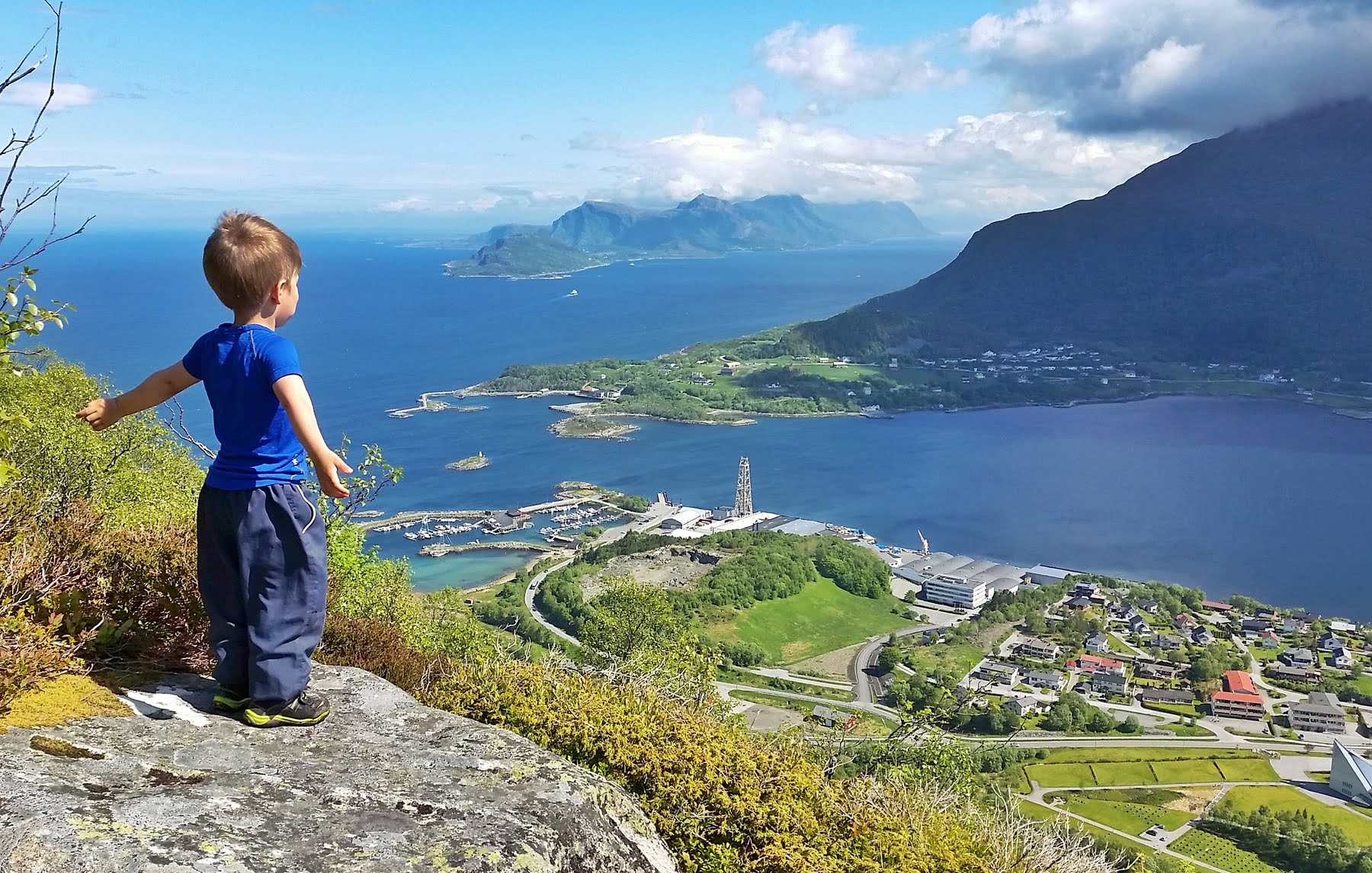
A short drive south, Tomrefjord sits where mountain and fjord meet. VARD operates a major shipyard here too, building some of the world’s most advanced specialty vessels. But ask Hege Lie, a teacher and mother of two who returned to the village after years away, and she talks about something else entirely. “One of the things I love most about Tomrefjord is that I can spend part of the day on the beach swimming or fishing in the fjord, and then a few hours later go on a beautiful hike in the mountains with the kids.”
Nearby Tennfjord is quieter still, around 1,700 people on the shore of the Grytafjord. Former journalist Arnt-Ove Tenfjord puts it simply: “It is simply wonderfully beautiful here. The colours on the sea when the sun goes down, taking a walk down to the pier where you might find someone fishing for mackerel… We have many neighbours from abroad. Germany, Italy, and several other countries. It’s a delightful mix.”
What unites these three villages is not just their industry. It is the ease with which residents move between a working day in a high-tech shipyard and an evening by the fjord, or on the ski trails in winter, or at disc golf (Tomrefjord has hosted world cup events). The airports of Ålesund and Molde are less than an hour away, but life here runs to a different rhythm.
Fruit Trees Down to the Waterline
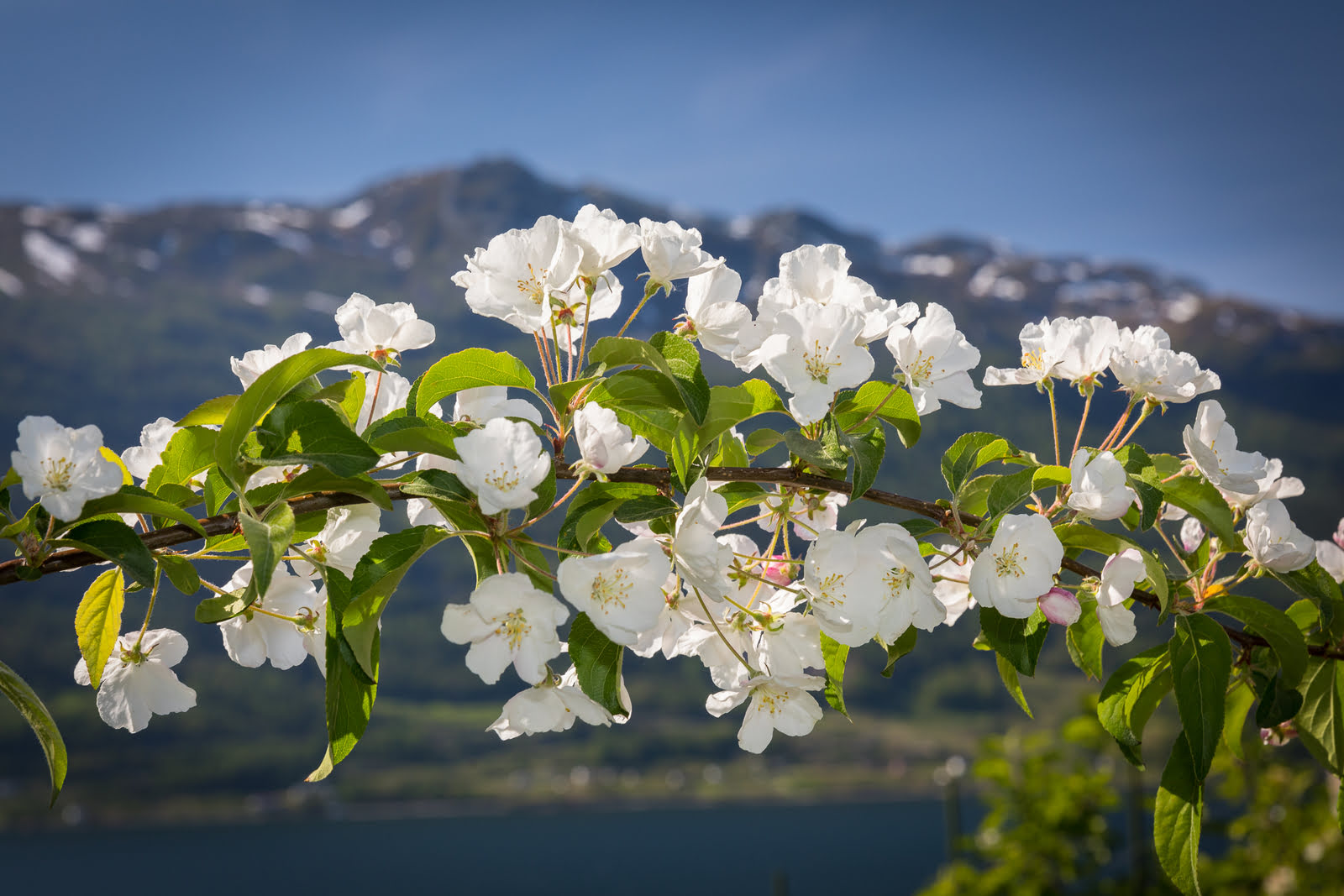
Not all fjord villages look like the dramatic cliffs of tourist brochures. In Lofthus, in Hardanger, the landscape softens. Apple and cherry orchards line the steep slopes above Sørfjorden, their roots in fertile soil, their branches catching the long summer light. This is one of Norway’s largest fruit-producing communities, and every year the village hosts the national championship in cherry pit spitting.
The connection between fjord and fruit runs deep. Composer Edvard Grieg had a composing hut built here, drawn by the Hardanger landscape. More recently, Lofthus has seen a cider boom, with local producers offering tastings and orchard tours alongside the fjord. The Queen’s Trail, named for HM Queen Sonja who counts it among her favourite hikes, climbs 1,100 metres between Lofthus and Kinsarvik, with the fjord glinting far below.
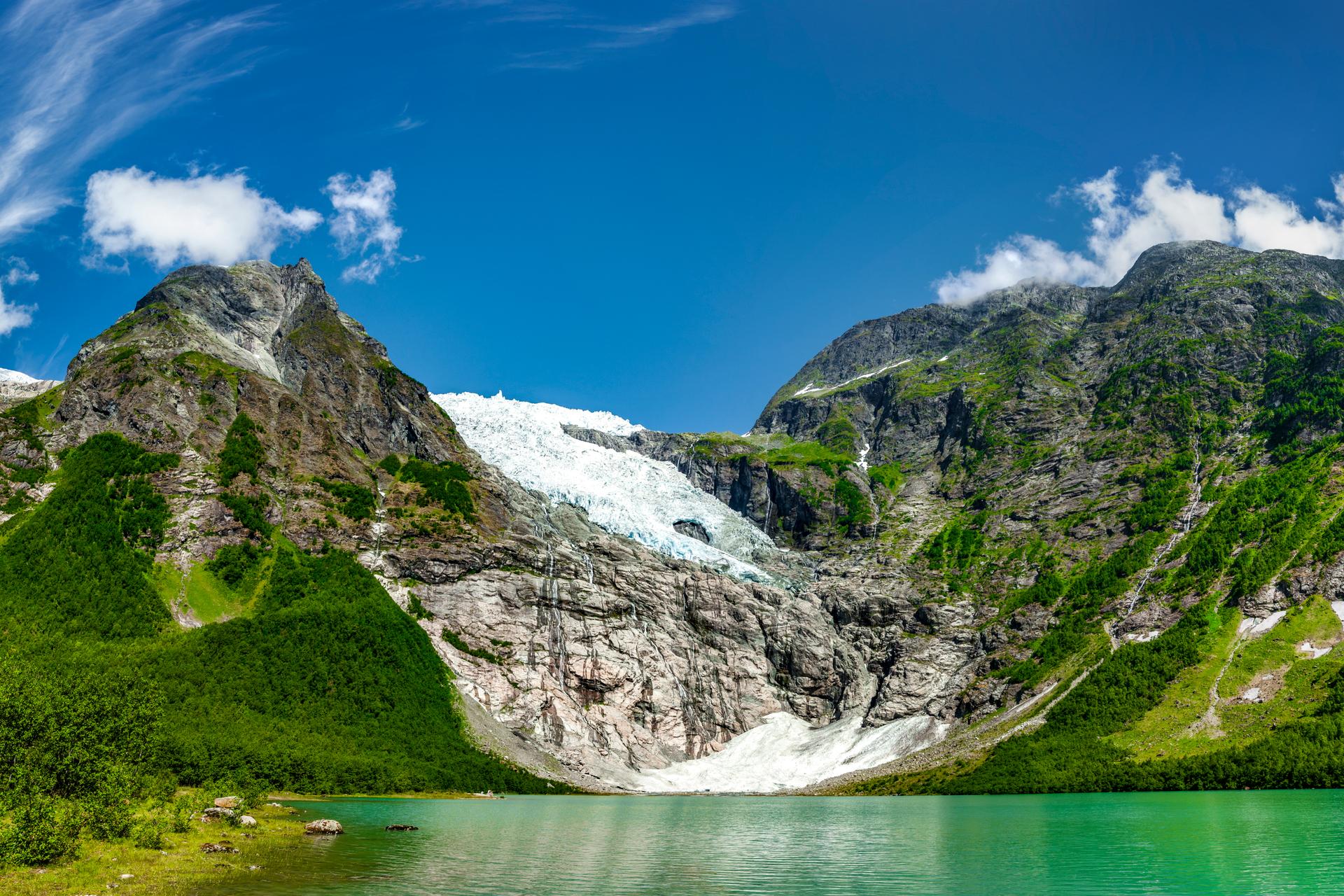 Bøyabreen glacier, Fjærland. Photo: Adobe Stock
 Ice, Books, and Slow Days
In Fjærland, the fjord is green. The colour comes from glacial meltwater: fine sediment carried down from Bøyabreen and Supphellebreen, two branches of Jostedalsbreen, the largest glacier on mainland Europe. Around 300 people live here, between the ice and the fjord, on flat land formed by moraine deposits that make the soil rich enough for dairy farming.
Fjærland is also Norway’s official Book Town. In the tiny centre of Mundal, 150,000 second-hand books fill a dozen stores housed in former barns, a decommissioned bank, and a retired ferry waiting room. There are outdoor shelves where visitors browse on the honour system. The Norwegian Glacier Museum, designed by architect Sverre Fehn, sits nearby. It is a building that belongs to the landscape as much as the ice does.
Life in Fjærland moves at its own pace. There are concerts, a solstice book fair, hunting and dancing clubs. Newcomers describe being folded into a community that values both its books and its landscape, sculpted by ice and water, and a slower way of living.
Where History Runs Deep
Fjords have been highways long before roads existed. At Gudvangen, the Nærøyfjorden, a UNESCO World Heritage site, narrows to just 250 metres between mountains that rise over a thousand metres on either side. Around a hundred people live here year-round, alongside Njardarheimr, a reconstructed Viking village of more than twenty timber buildings. The name means “home of the northern god Njord,” associated in Norse mythology with the sea, wind, and fishing.
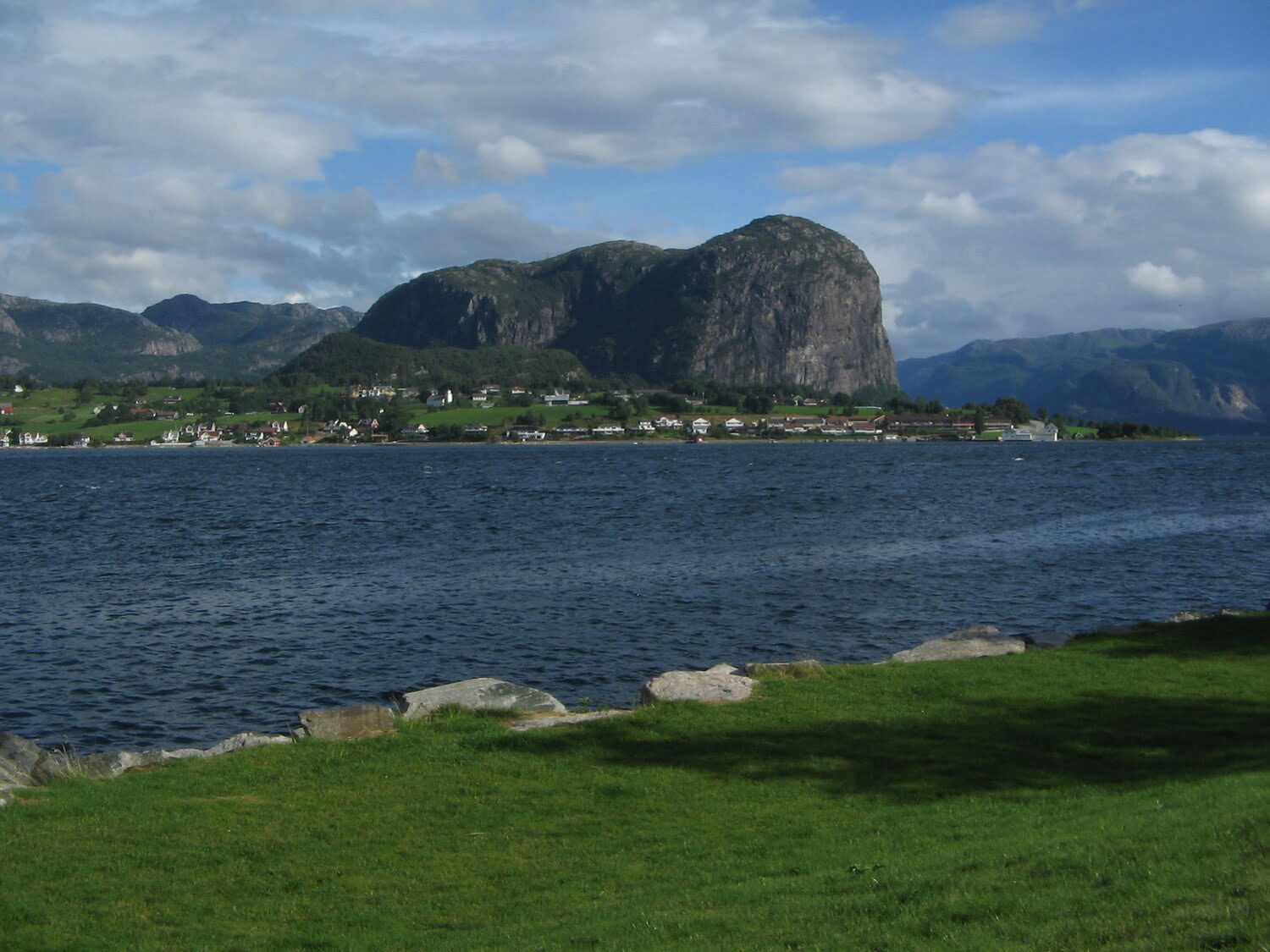
Further south, at the junction of the Lysefjorden and Høgsfjorden, lies Forsand. About 500 people live here with views across to Preikestolen, one of Norway’s most photographed cliff faces. But Forsand’s history goes far deeper than tourism. At Landa, archaeological excavations have uncovered continuous human settlement spanning more than 2,000 years, from the Bronze Age through the Iron Age and Migration Period. The reconstructed ancient village is open to visitors in summer.
In villages like these, the fjord is not just landscape. It is a record of human presence, a route that carried people, goods, and stories long before the modern road arrived.
Seventy People and Four Hundred Goats
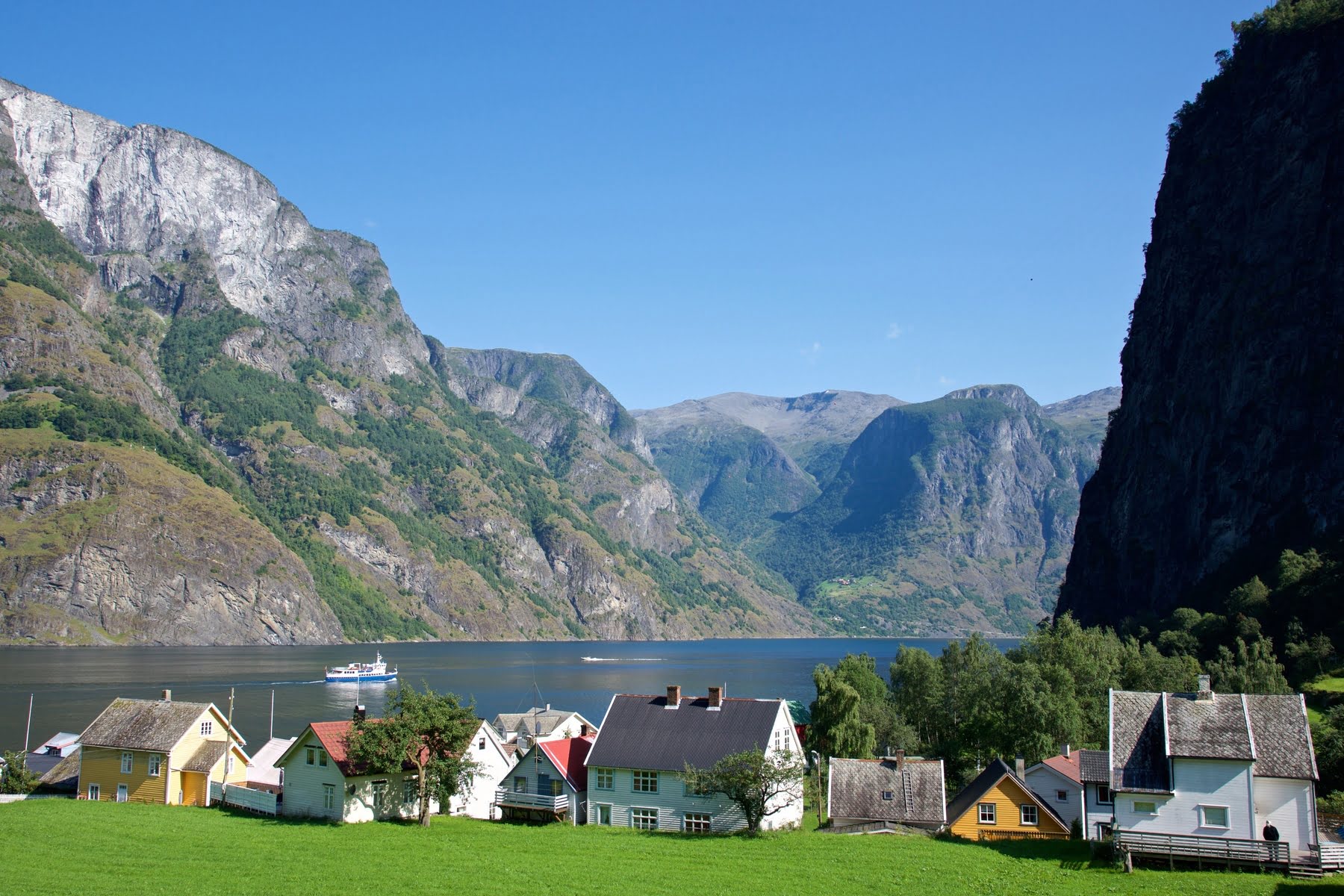
Deep within the Sognefjorden, also on the UNESCO World Heritage List, Undredal is home to about seventy people and more than four hundred goats. The village is known for its award-winning goat cheese, produced here in the traditional way for decades, and for what is believed to be the world’s smallest stave church still in use, likely dating to the twelfth century.
Undredal is also said to have inspired the scenery in Disney’s Frozen 2, though the village itself is far quieter than any film set. Surrounded by towering mountains and accessible by a single-lane tunnel or by boat, it is a place where scale itself becomes a defining feature. In a community this small, every person matters, every tradition carries weight, and the relationship with the landscape is intimate rather than grand.
Where Rivers Meet the Sea
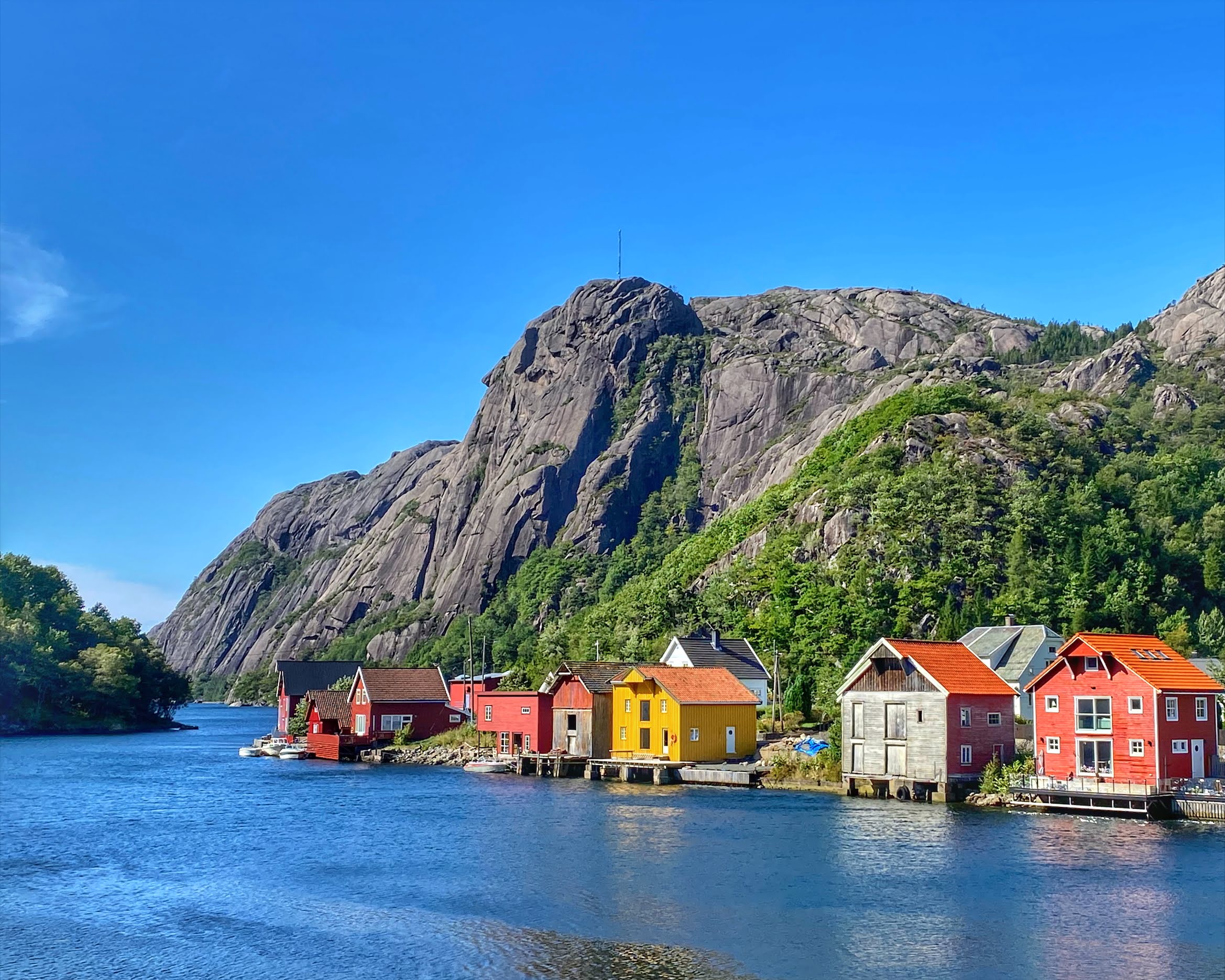
Fjord villages are not only found in western Norway. In the south, where the Sira river flows into the Åna fjord, sits Åna-Sira, a village of about 175 people that straddles two municipalities, two counties, and even two regions. The river marks the boundary between Agder and Rogaland, between the South Coast and the West Coast. “In my view, we have the best of both worlds,” says Tina Kvelland Sivertsen, who works in the village store.
That store is itself a story. When the old grocery shop closed, the community built a new one through collective effort, a volunteer-driven project that became the social heart of the village. “A store is incredibly important in a small community,” Tina explains. “When the old store closed, everyone felt the difference. People became less social, and the village lacked something. So, we built a new one.”
Åna-Sira sits within the Magma UNESCO Geopark, an area of geological significance where ancient mountains, once thought to have been taller than the Himalayas, have been eroded by glaciers to expose the magma chambers beneath. The village is home to Finny Sirevåg, a shrimp factory that has been processing Norwegian shrimp since 1904. In summer, the population triples, and Rune Løyning, a ship captain turned chef, serves fine dining for sixteen guests at a time in a house with gold cutlery from the 1920s.
What Fjord Village Life Can Look Like
Across these villages, and the many others like them, certain patterns emerge. Life is structured less by rush hours and more by seasons: when the snow arrives on the mountains, when the apple blossoms open, when the mackerel run in the fjord. Children grow up with the water as their playground and the mountains as their backyard. Adults describe a daily calibration between work and landscape that is difficult to replicate in a city.
Community works differently here too. In a village of a few hundred people, the football club, the brass band, the volunteer fire brigade, and the parent committee are often the same group of people. When something needs doing (a store built, a trail cleared, a festival organised) it gets done collectively or not at all. This is not always romantic. It demands participation. But for those who show up, it offers a sense of belonging that can be harder to find in larger places. If the idea of moving to Norway has crossed your mind, these communities are a good place to start looking.
The fjord itself remains the constant. It is the view from the kitchen window, the place to swim after work, the reason the air smells of salt. It is not a destination. It is home.
Explore More Fjord Villages
Browse more Norwegian villages where daily life is shaped by the fjord, the shoreline, and the communities that have grown there.
Abelvær
Fjord Fun in Trøndelag
Andabeløy
Island of Southern Charm
Aukra
Energizing Europe
Austertana
The Longest Beach and the Most Quartz
Bekkarfjord
The Coolest Milk in the World
Birketveit
Modern Vibes
Brandal
A Touch of the Arctic Sea
Brattvåg
From Local Craft to Global Impact
Bugøynes
"Little Finland"
Bygland
Golden Beaches
Byglandsfjord
Layers of Warmth
Eikefjord
Central Detour
Ekkerøy
Birds, Beaches and Arctic Kiting
Elgå
The Gateway to Wilderness
Feda
Historical Boathouses
Fjærland
Glacier and Books in Abundance
Fjørtofta
Tight-Knit and Beautiful
Flemsøya/Skuløya
Shaping the Future of Maritime Industry
Folldal
Majestetic Mindfulness
Forsand
Where Fjords Cross
Fossbakken
Northern Lights and Wild Beauty
Glåmos
Disc Golfing, Retro Clubbing and Hapchida-Do Martial Arts
Gudvangen
Viking Life by a Spectacular Fjord
Haramsøy
Thriving Industry and a Golden History
Harøya/Finnøya
Islands of Opportunities
Heidal
Wooden Eye Candy
Hellesylt
Good Enough for Hollywood
Hidra
Where Kindergarten Kids Catch Their Own Lobster
Hosanger
Old Traditions - Vital and Fresh
Hovden
Tiny, Tiny – but Mighty Popular
Hyen
World Class Boats and the Christopher Colombus Myth
Kiberg
The Most Eastern of Norway’s East Coast
Kongsfjord
Historic Village in the North
Krøderen
Get Pumped, Chill, Repeat
Kyrkjebygd
The Southernmost Mountain Paradise
Lepsøya
Island of Majestic Rock Shelters
Leveld
Painted with Art and Tradition
Lofthus
Fruity by the Fjord
Lom
A National Park Village in Majestic Mountain Landscape
Lovund
Island of Entrepreneurs and Puffins
Løkta
Charming Island, Great Job Journeys and a Teddy Bear Forest
Mykland
Treasure Trove in the Woods
Nordkjosbotn
Goat Milk and the Art of Leaving One’s Mark
Ose
Tiny Village of Festivals
Sandøya
A Southern Island Pearl
Sjøholt
Rural, but Central
Skarsvåg
the Northernmost of Them All
Sletta
Howdy, Cowboy!
Solheim
Peaceful Pearl
Sollia
Iconic View
Stø
Murals and the Queen’s Route
Sørvågen
Lofoten Love
Søvik
Where Nature Inspires the Future
Telavåg
Historic Village by the Ocean
Tennfjord
Local Calm, Global Strength
Tjøtta
International Science, Flat and Fine
Tomrefjord
Anchored in the Fjord, Aiming for the Future
Torpo
From Tunes to Trails, a Lovely Mix
Undredal
Disney Inspirator and Splendid Goat Cheese
Uthaug
For Esthetes and Nature Lovers
Vikebukt
Rural Bliss with Short Distances
Å
Last, Definitively Not Least
Åna-Sira
Bridge Builders in Many Ways
Find Your Fjord Village
Freysta members can explore local job opportunities and connect directly with village representatives across Norway. It is completely free.
Become a Freysta member