The Vest-Agder Bunad
The women’s bunad of Vest-Agder reflects the region’s traditional clothing style from around 1830 to 1870. Many of its garments are exact reproductions of historical pieces. Still, the bunad has also been shaped by 20th-century expectations of what a bunad “should” look like. As a result, the Vest-Agder bunad is no strict reconstruction – we’re talking a bit more mix and match, but every piece is true bunad and every piece shows a bit of the Vest-Agder history.
A Passion for Local Traditions
As early as the 1900s, dedicated enthusiasts began taking an interest in the traditional clothing of Vest-Agder. At that time, there were still people alive who remembered how folk dress was worn at the end of the traditional clothing period. According to Governor Daniel Koren’s records from 1914, some were still wearing folk dresses. Additionally, a large collection of historical garments was preserved. The material gathered was later published in the book Gamle Bunader fraa Vest-Agder (1929); this became a key reference for further bunad development.
In the early years, it was mostly people connected to the frilynte ungdomslag movement (a progressive youth organization that was all over Norway). The young people adopted the bunad, often relying on various tailors and skilled seamstresses. Because of this, early versions of the bunad varied significantly in fabric choices and craftsmanship. Despite these differences, it’s easy to recognize that these early bunads belong to the same tradition as today’s versions.
Let’s fast forward to the 1950s. Sigrun Skar published the book Agder Bunader (Agder Bunads). Having been involved in bunad research from the very beginning, Skar had extensive knowledge of the historical clothing materials.
Her work led to several changes in the bunad, most notably the introduction of embroidered aprons. While embroidered shawls had been documented in the region, embroidered aprons had not been preserved. However, it was said that they had once been used.
Based on this information, Sigrun Skar adapted embroidery patterns from shawls to create the bunad aprons. At the time, it was widely believed that bunads should include embroidery, which likely influenced this decision as well.
The Vest-Agder bunad today comes in a wide range of materials and combinations of garments.
Let’s take a closer look.
A Closer Look, Piece by Piece
The distinctive klauv, which sits at the back of the bodice and the jacket, is an important feature of the Vest-Agder bunad.
The klauv consists of small pleats at the back, which is the last remnant of a fold that used to be present when the bodice was wider. Over time, the waistline shifted upward, gradually shortening the fold until it eventually became the small klauv found today in Vest-Agder.
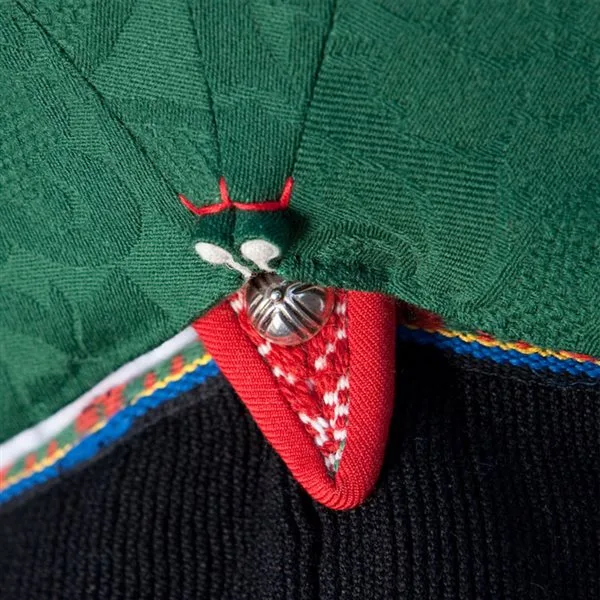
When it comes to the skirt, there are three variations to choose from: a striped skirt, a gathered skirt, and a pleated skirt – the latter having a bell shape at the hem. All three versions are held up by woven suspenders, fastened to the skirt with three silver buttons: one on each side at the front and one in the middle at the back.
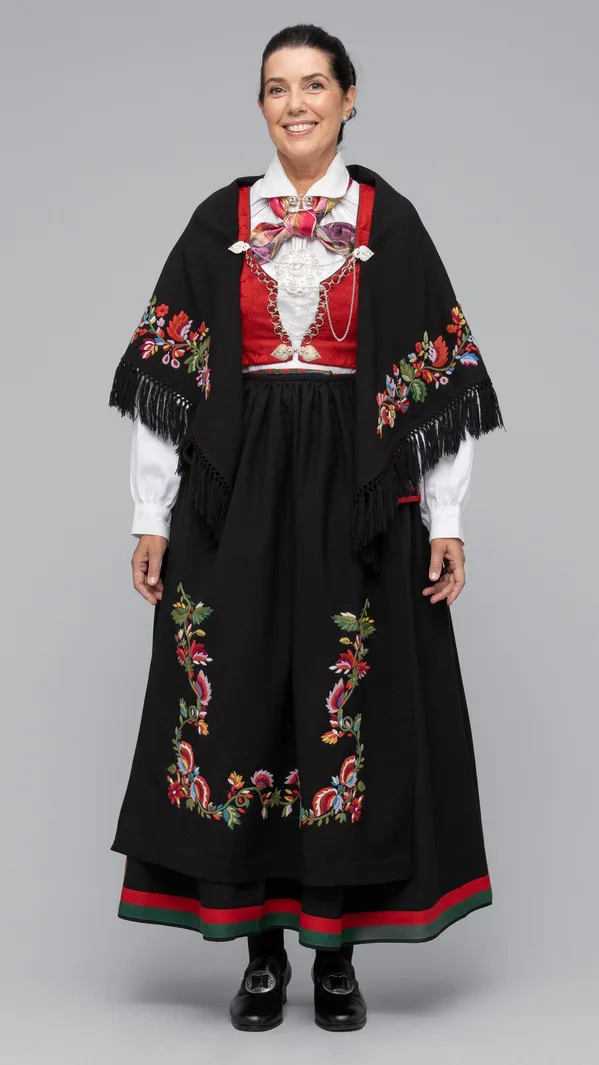
Rynkestakk
Gathered skirt
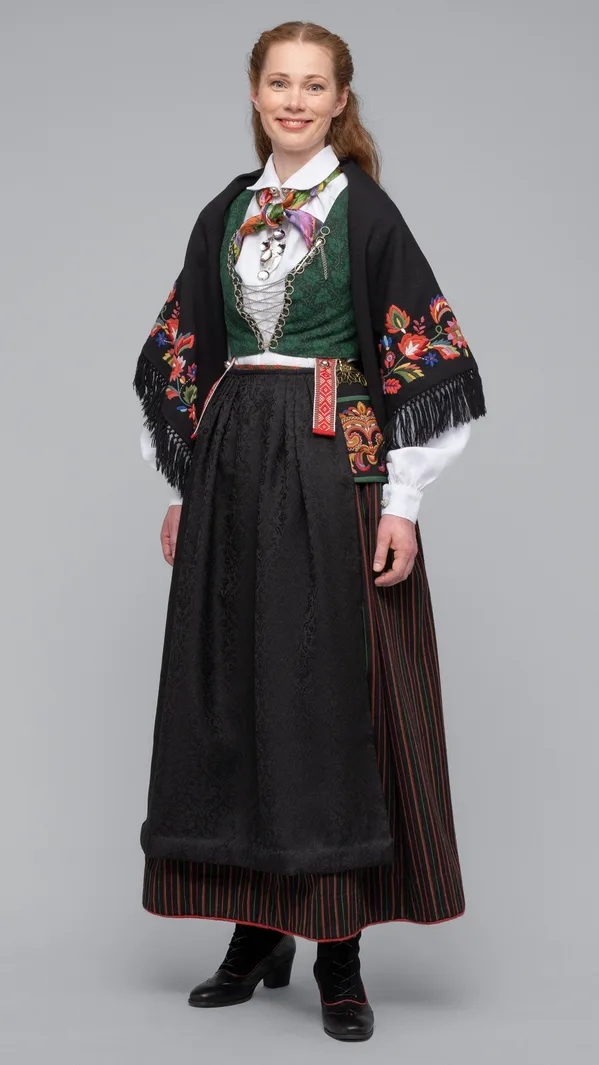
Stripestakk
Striped skirt
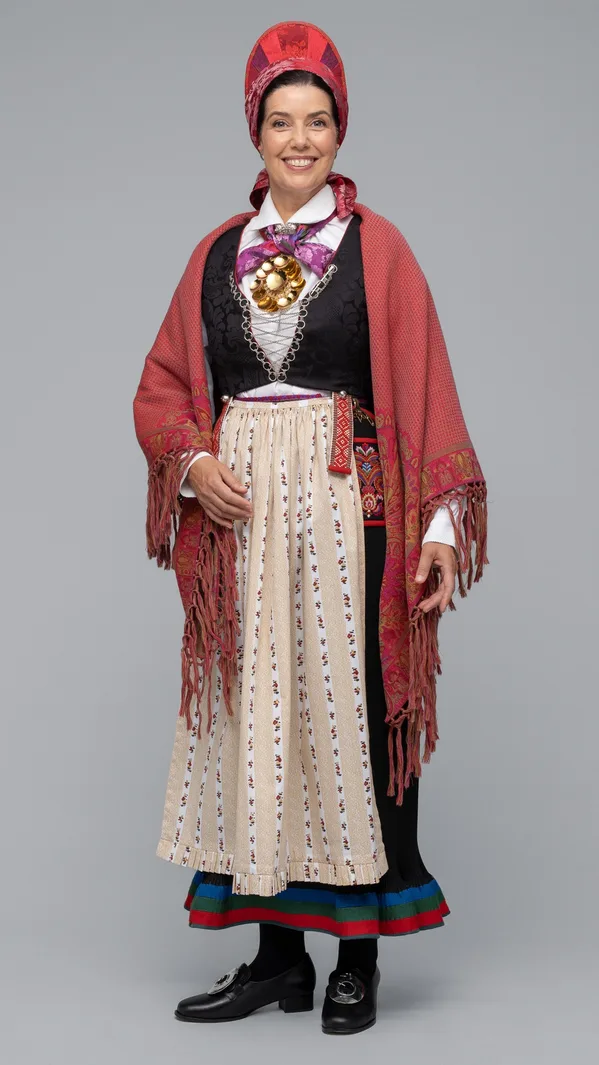
Plissestakk
Pleated skirt
Let’s talk bunadssølv! Relatively few examples of traditional draktsølv (silver jewelry) have been preserved in Vest-Agder, but several models have been recreated.
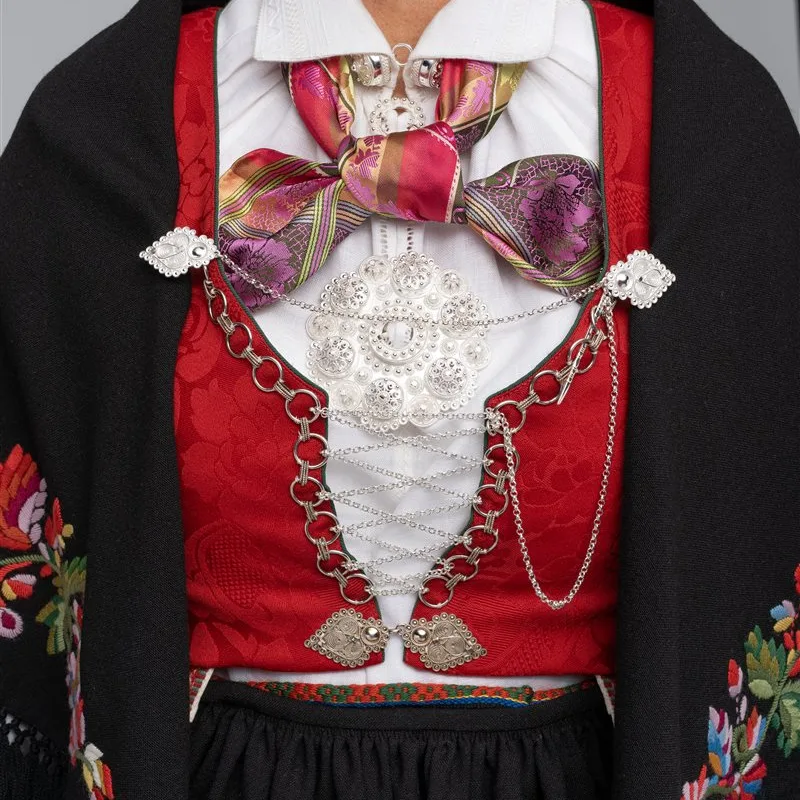
The bunad typically features a double neck button at the top of the shirt, a small chest ring with a sprode (decorative pin) underneath, and a larger, round or heart-shaped leaf brooch or round bole brooch. In this region, the lauvsølje brooches were traditionally so large that one would partially overlap the next.
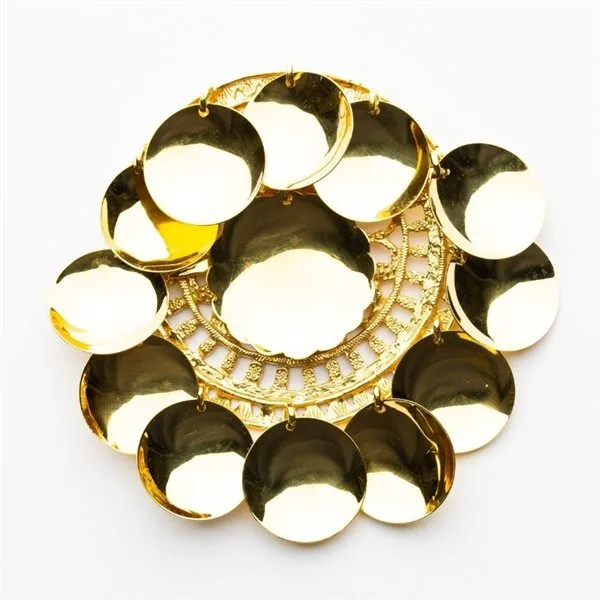
In addition, cufflinks for the shirt, and buttons and hooks for the jacket, are used. The bodice has eyelets, a chain, and silver clasps. Round shoe buckles in silver have also been reproduced.
There are several versions of the shirt, made from either linen or cotton. These shirts are embroidered in whitework on the collar, shoulder area, and cuffs.
Whitework embroidery is a technique where white thread is stitched onto white fabric, creating an elegant design through texture and openwork rather than colour contrast. This method often includes techniques such as satin stitch, eyelets, pulled thread work, drawn thread work, and cutwork to add dimension and intricacy.
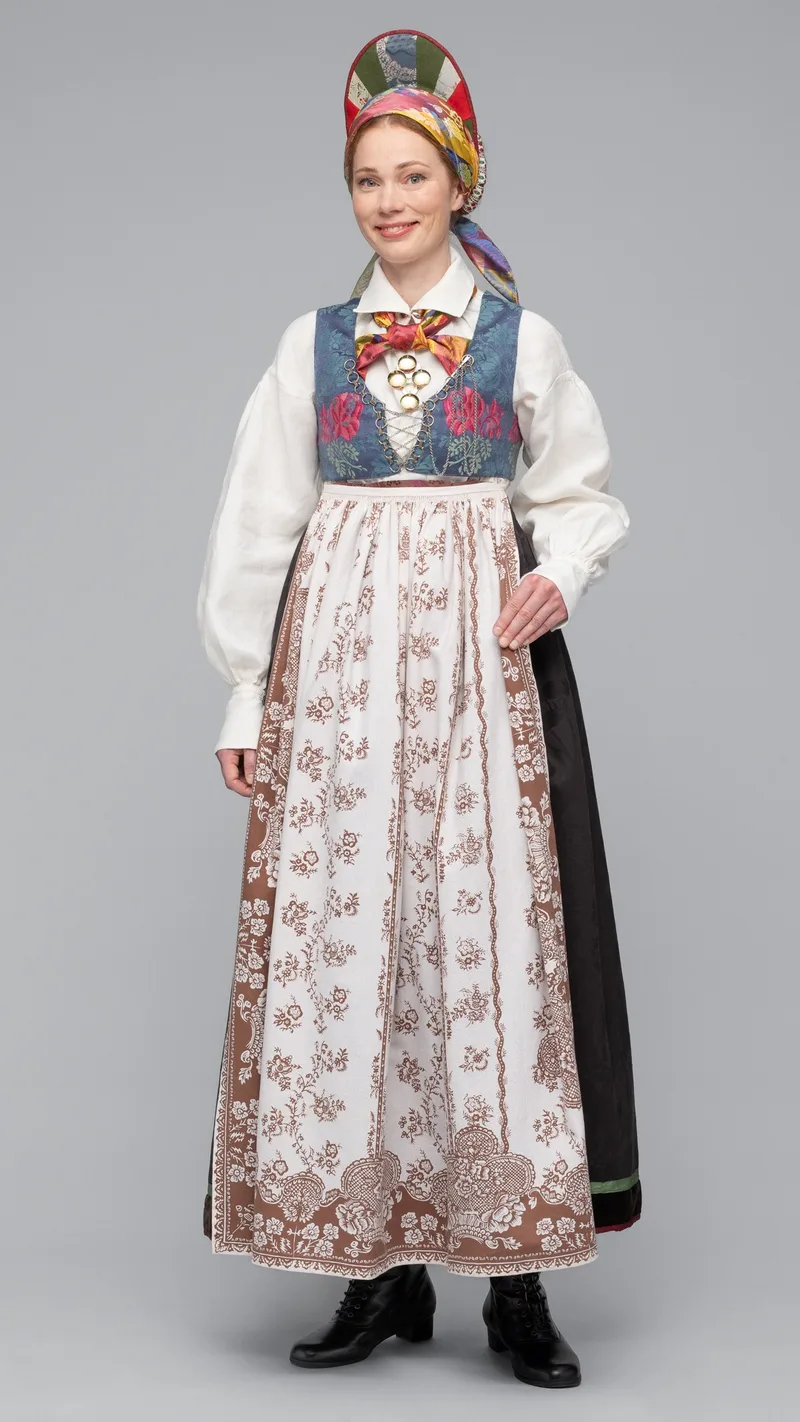
Various apron styles are also used with the bunad. Today, aprons are made from white linen, green or red silk/wool damask, and embroidered versions.
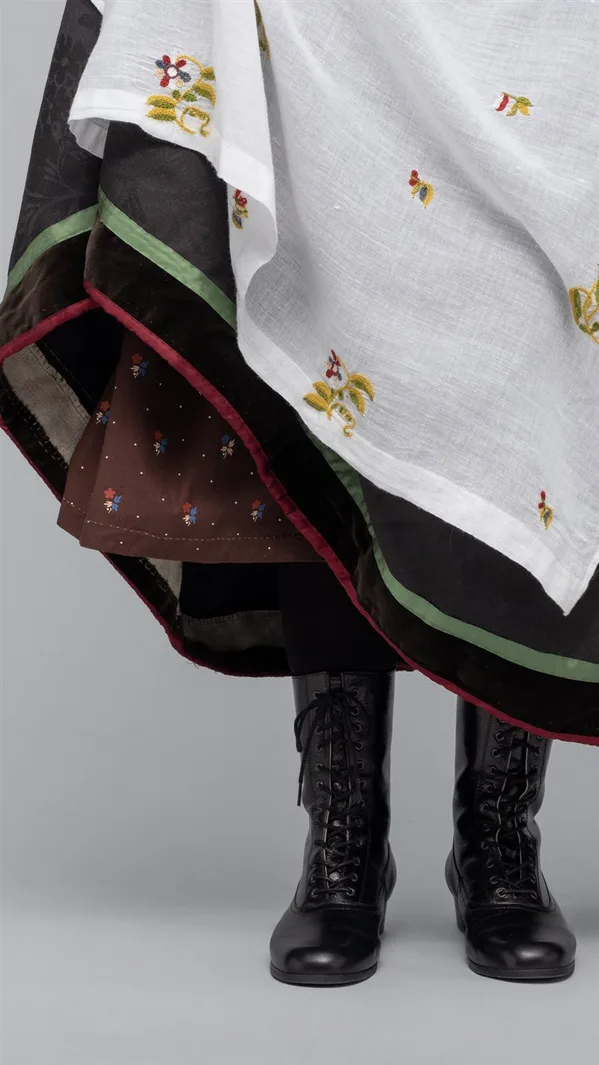
A sturdy underskirt is essential for ensuring the outer skirt falls neatly. Traditionally, it was said that the underskirt should be so beautiful that anyone could see it without the wearer feeling embarrassed. The underskirt is made from striped cotton fabric and gathered at the waist.
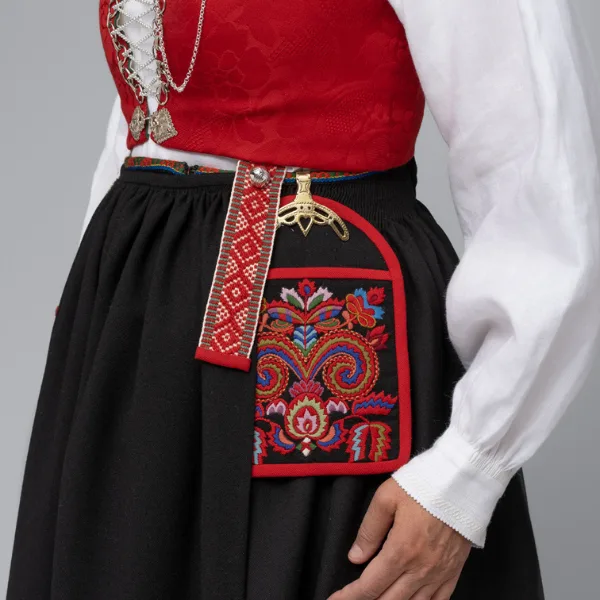
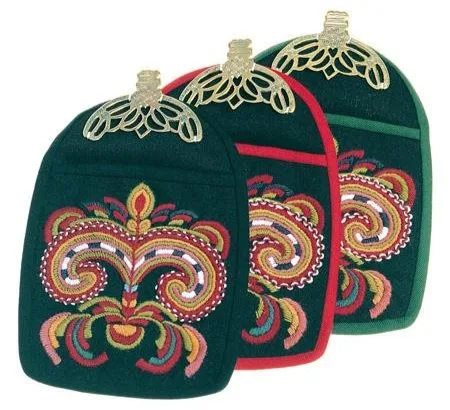
The loose pocket (løslomme) on the skirt comes in several versions, all featuring black wool fabric with multi-coloured wool embroidery. They are absolutely beautiful!
Headpieces for the Bunad – It’s Complicated
Now, it gets a bit tricky! The bunad has several different headpieces. One is the valk, and possibly a shawl over it. The valk sits lower for unmarried women than for married women. For unmarried women, it is called a rult, while for married women, it is called a vase.
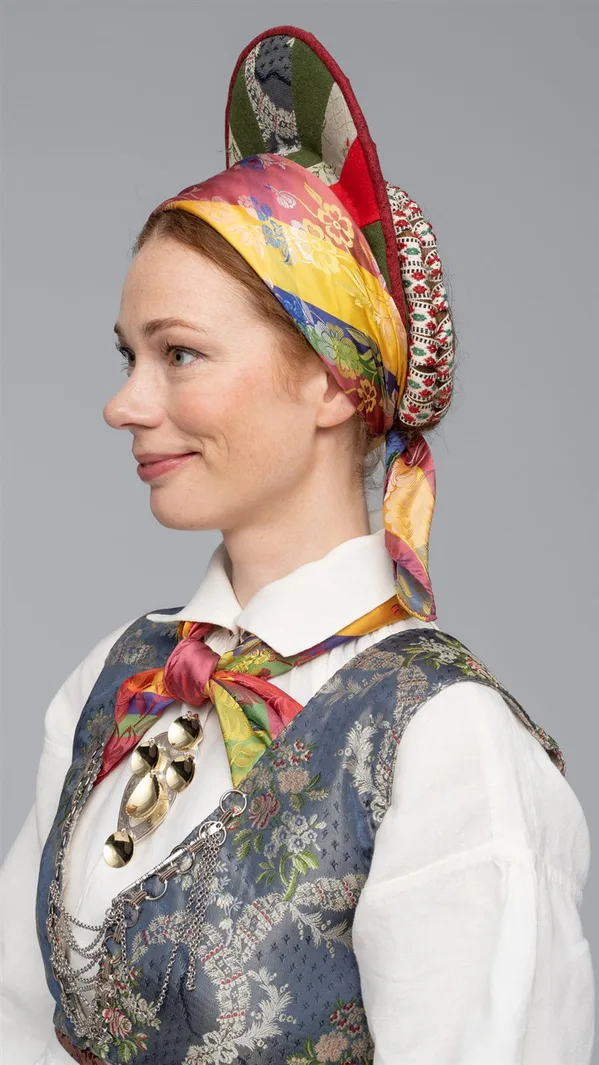
The valk can be worn without the shawl, with a scarf tied smoothly around the front. The vase is richly decorated with applied fabrics, ribbons, and metal ornaments, while the rult is typically made from small-patterned cotton fabric.
Now, the valk itself has a special history. This distinctive headpiece is sewn in many colours and adorned with ribbons in various shades and hand-crafted gold filigree. It is said that it should never be made entirely in black, and none of the vases are sewn exactly alike. In one of the old vases, an old love letter was reportedly found. The valk was traditionally filled with birch bark to give it a stiff shape. However, because it is difficult to shape, hessian fabric is now used instead.
In addition, there is a cap made from silk damask or brocade-like fabric with lace decoration. This cap is modelled after a children’s cap, and it is rarely used. Some also wear a gathered cap.
The Bridal Bunad
The bridal traditions in this region also include the distinctive headpiece valk. But when there was a wedding, a special version was in use. This richly decorated ornament, made using a variety of materials, is called a reisle.
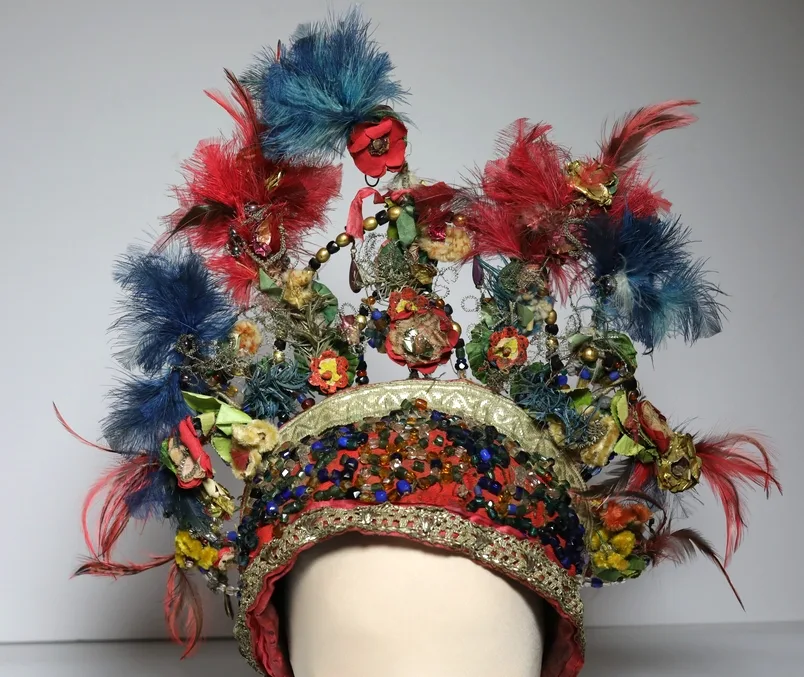
The reisle from 1855, on display at the Vest-Agder Museum, is made of wool fabric, silver lace, colourful glass beads, fabric flowers, feathers, and silver. It is an exceptionally intricate piece of craftsmanship!
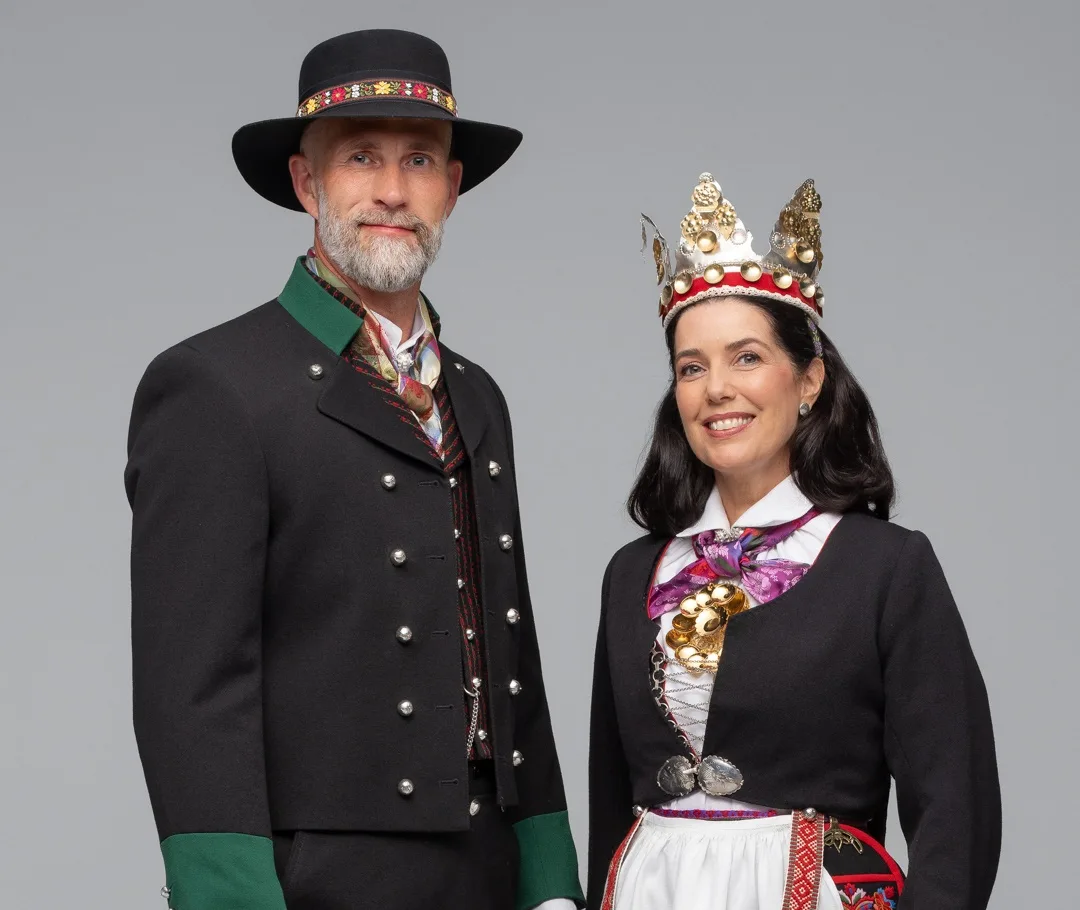
There is also a silver bridal crown available for rent from Vest-Agder Husflid. It is a replica of the only preserved silver crown from the region, with the original dating back to around 1800. The crown is worn with a white apron featuring hemstitching (hullfald), and the bride should always wear a jacket (trøye).
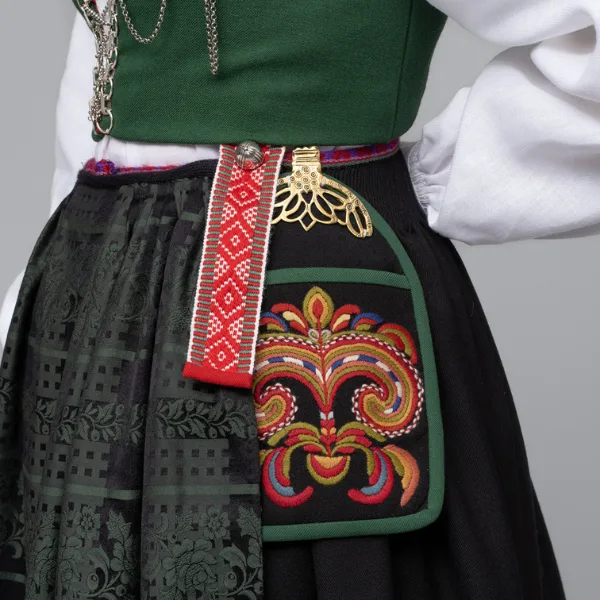
There are many beautiful ways to wear the Vest-Agder bunad — and each one is simply stunning!