
The Ships That Made the Vikings Unstoppable
How did the Vikings manage to dominate Europe’s seas for centuries? Their ships were simply in a league of their own.
How did the Vikings manage to dominate Europe’s seas for centuries? And not just Europe. No one travelled as far as the seafaring Norsemen. Their ships were simply in a league of their own.
Masters of the Sea
You’ve probably seen the scene in a TV series or film: long, slender ships with carved dragon heads gliding out of a mist-covered fjord. The sound of a horn echoing across the water — dark and ominous. Scarred, broad-shouldered warriors rowing in rhythm, their eyes fixed on a clear objective: new treasure, new land, a fresh raid.
But without their ships, none of it would have been possible.
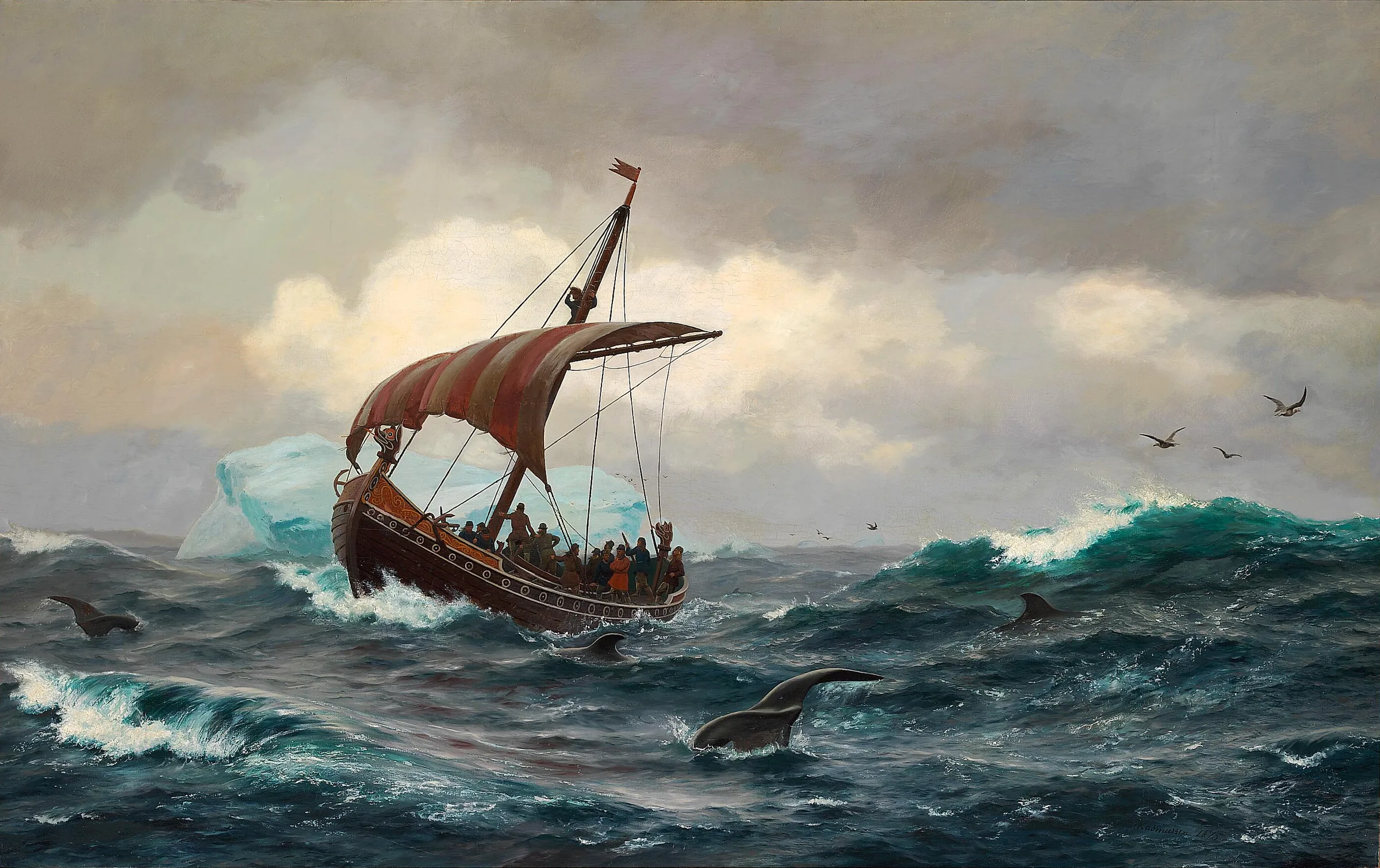
To put it mildly, Viking ships changed everything. Their longships laid the very foundation for Viking success. The innovations developed in Norwegian shipbuilding between the 8th and 12th centuries transformed the entire medieval fleet. These vessels were robust enough to cross the North Atlantic and reach the shores of North America. Their shallow draft also made it possible to sail deep into Europe’s rivers and inlets.
The warriors of the north did not fear the sea. They saw it as opportunity. No one could stop them, because the Vikings were the finest sailors of their age.

“They were simply fantastic boats. The Viking longships were almost designed for surprise attacks.”
Professor Jon Vidar Sigurdsson, historian at the University of Oslo and author of many books about the Vikings
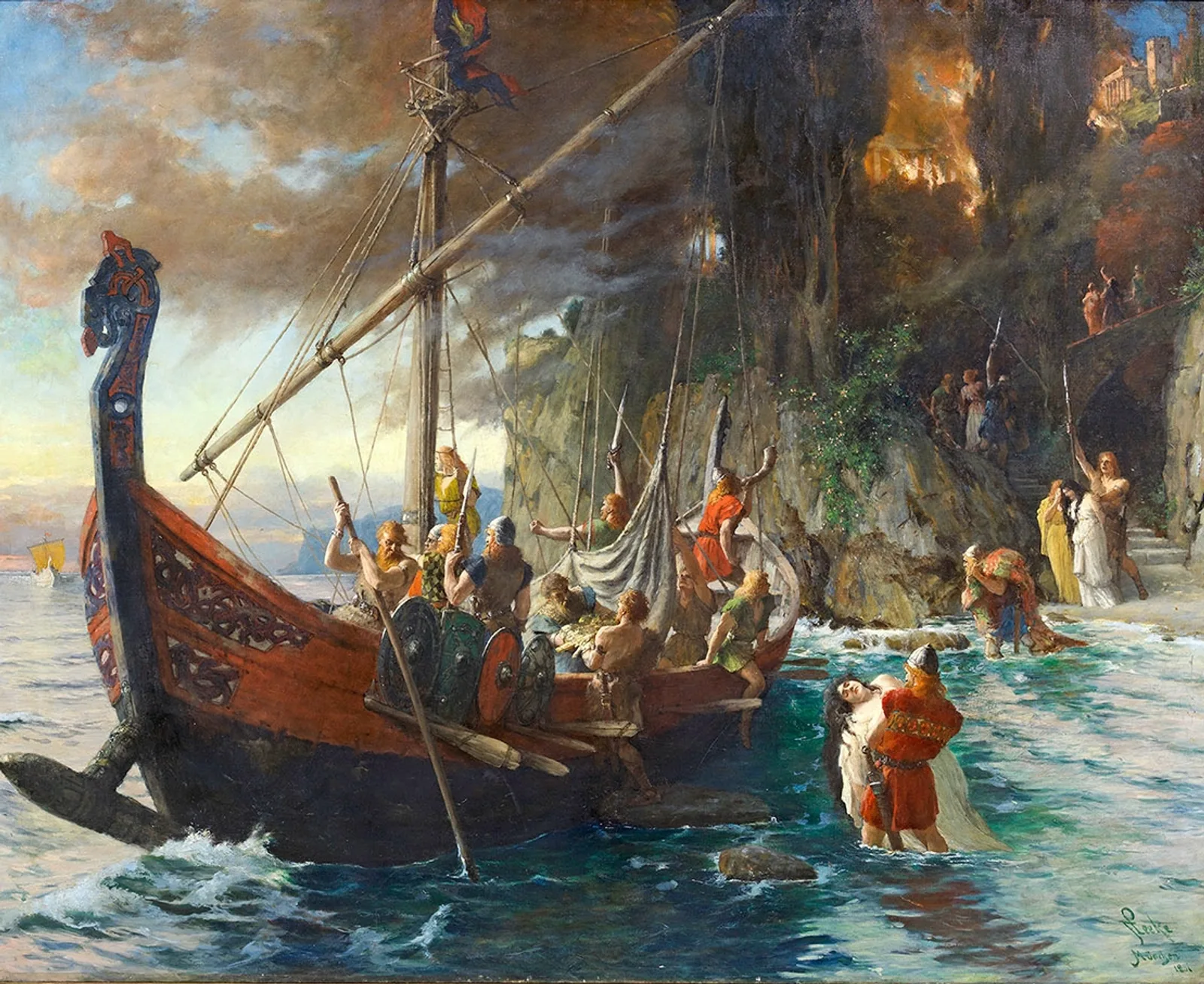
And that was exactly the point. Viking raids relied on speed and unpredictability. Small bands could terrorize coastal towns, creating maximum impact with minimal force. Stories of their ferocity often travelled ahead of the fleet, turning reputation itself into a weapon.
Built for the Sea — and the Land!
The period from around 800 to 1100 AD is known as the Viking Age. During these centuries, Norwegian and Nordic seafarers dominated European waters. And, as a consequence, shaped large parts of society itself.
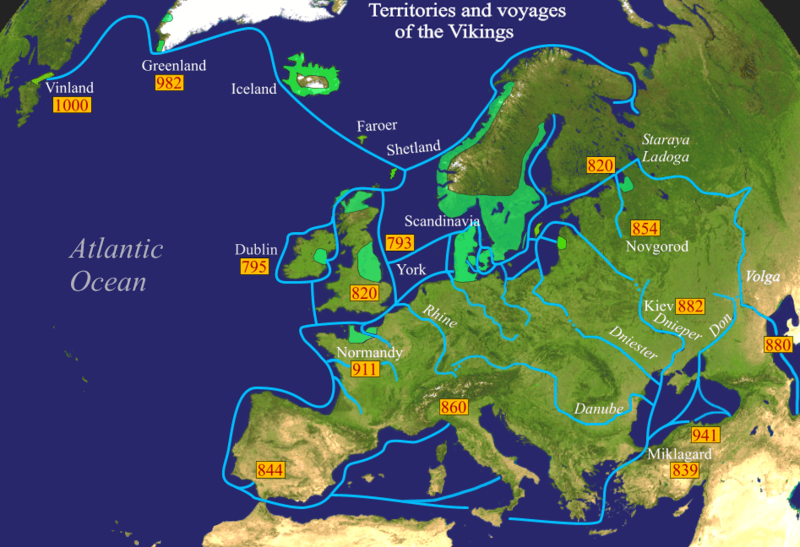
Thanks to their exceptionally well-constructed warships, trading vessels, and cargo ships, the Vikings discovered North America, colonized Iceland and Greenland, and settled islands across the North Atlantic. They established communities from Russia to France.
The Vikings fought extensively across the British Isles, colonised parts of Scotland and Ireland, and founded cities such as Dublin and York. They raided coastlines throughout Europe and brought their spoils back to the cold north. Many also served as mercenaries in foreign armies.
Vikings could be found across continents. And it was their ships that carried them there.
01
Across the Atlantic
These vessels were robust enough to cross the North Atlantic and reach the shores of North America.
02
Deep into rivers
Their shallow draft made it possible to sail deep into Europe’s rivers, estuaries, and inlets.
03
A nearly amphibious fleet
They could be dragged ashore and launched again, while still combining speed, carrying capacity, and manoeuvrability.
One of the Vikings’ greatest advantages was the almost amphibious nature of their ships. These vessels could not only cross vast oceans. They could also be dragged ashore and sailed into shallow rivers, estuaries, and narrow inlets. Built with remarkably light but strong materials, their shape gave them speed, carrying capacity, and manoeuvrability all at once.
The keel is considered one of the most important innovations that made Viking ships so agile and controllable.
The Three Main Types of Viking Ships
Different Ships for Raids, Trade, and Transport
Viking ships were divided into three main types.
Longships
Built for raids
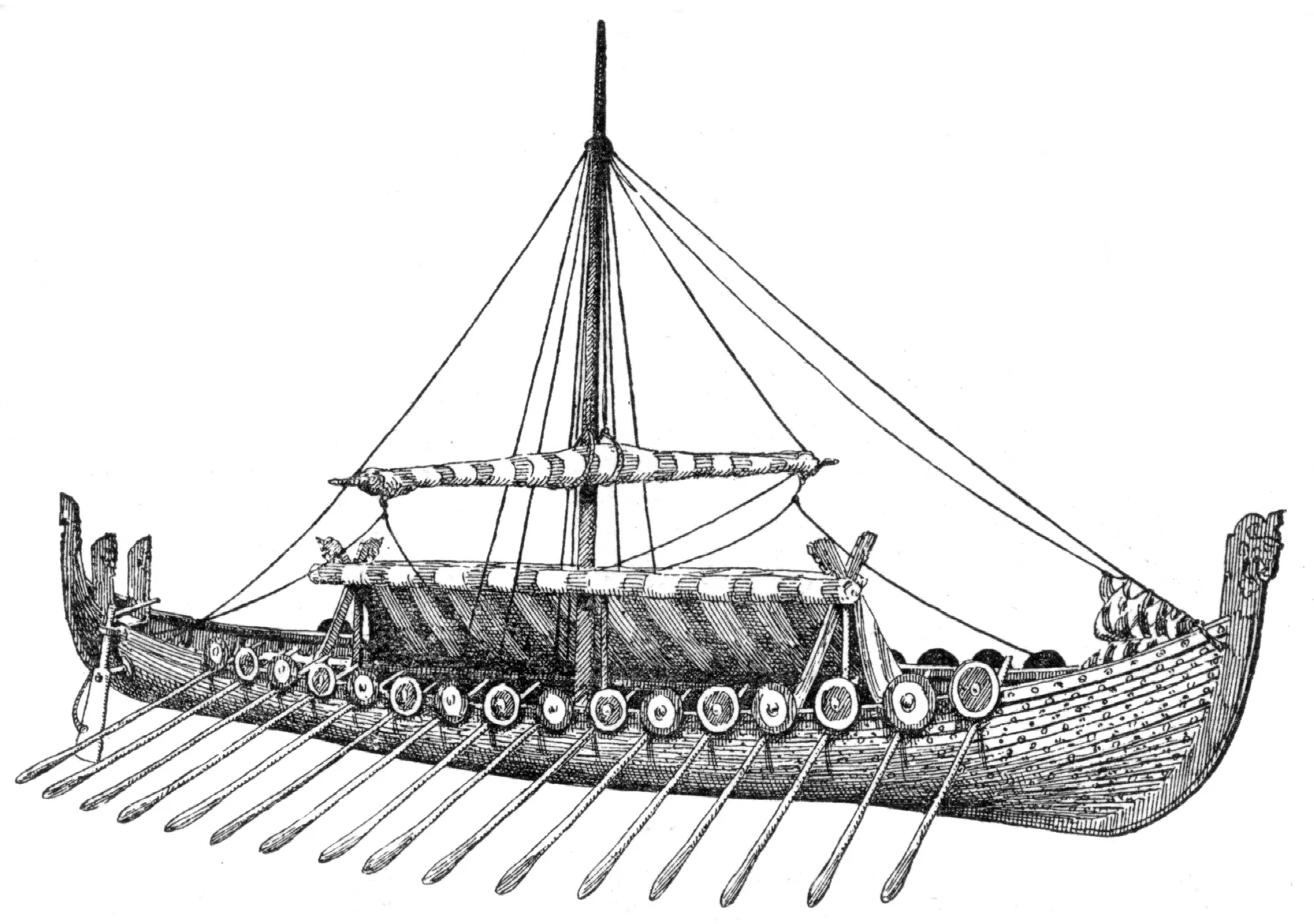
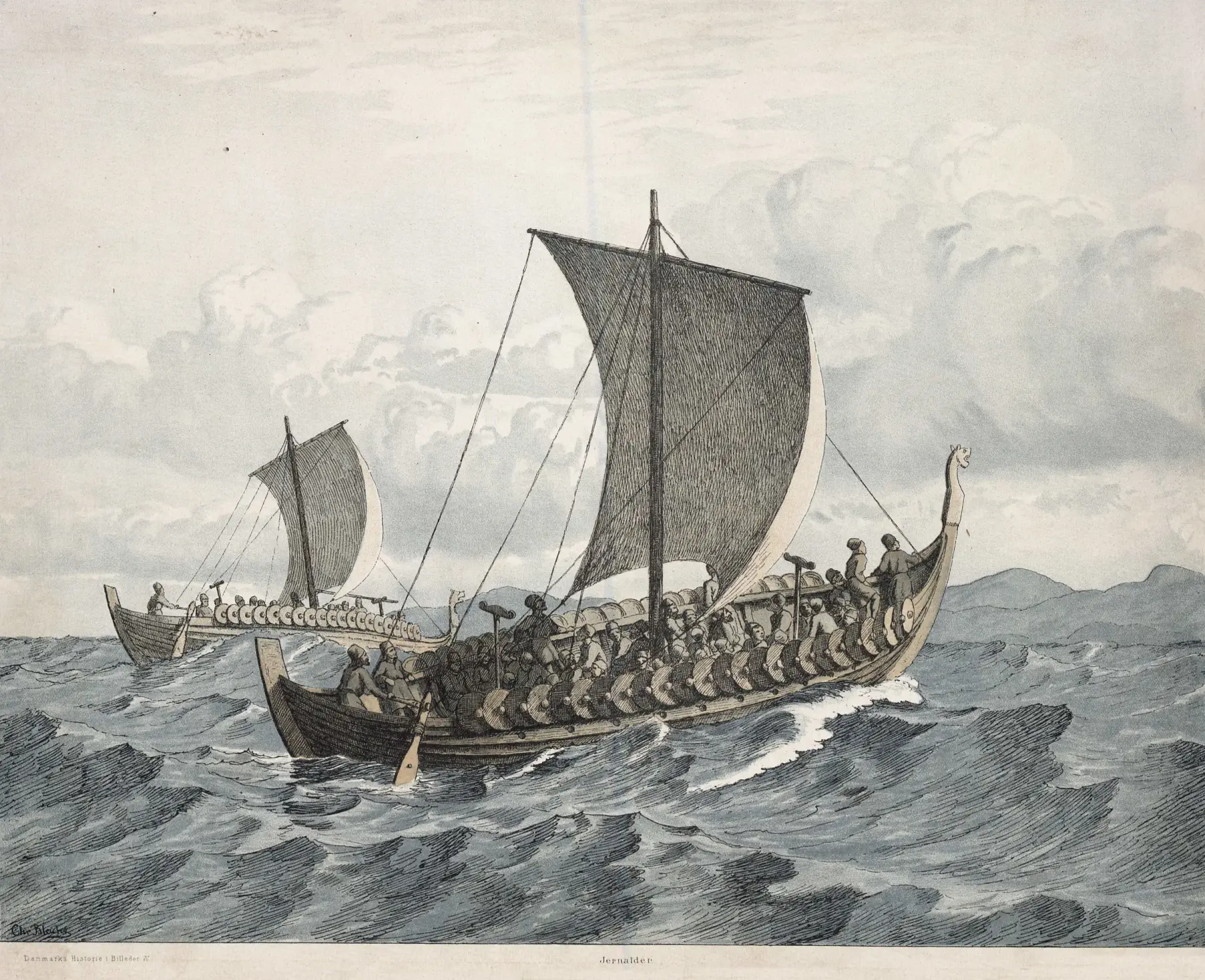
The longship was the Vikings’ war machine. Sleek, narrow, and incredibly fast, these ships cut through the water with astonishing speed. They were typically at least 15 metres long.
Longships mainly sailed along European coastlines, carrying raiding parties in search of wealth, power, and military targets. They needed no harbour and could be beached almost anywhere. Of course, this was very bad news for wealthy monasteries along the British coast. And many others.
Karve
The transport ships
Karves were smaller versions of the longship. These were often privately owned vessels, built for local coastal journeys and shorter trading expeditions. Primarily used for transport and commerce, they could also be used in warfare when needed.
They were versatile enough for rivers, fjords, and open sea in calm weather.
Knarr and Busse
The cargo ships
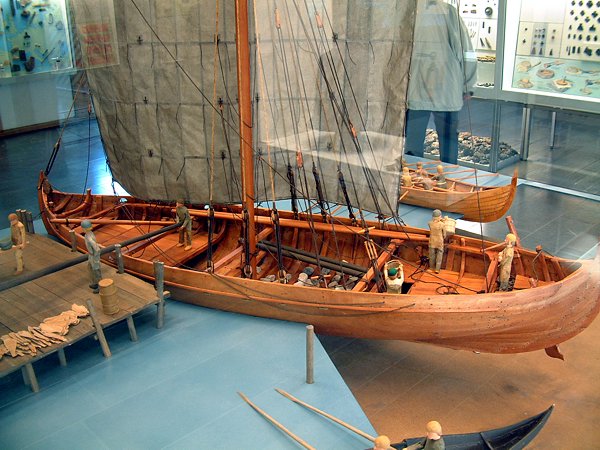
The knarr was broader and deeper than the longship and eventually became the principal cargo ship of the Viking world. These vessels could travel great distances while carrying substantial loads, for instance walrus tusks, wool, timber, grain, furs, slaves, honey, and weapons.
The knarr and busse were the backbone of all long-distance trade along the Norwegian coast, the North Sea, and the Baltic. With these cargo ships, the Vikings connected Norway, Iceland, Greenland, and beyond. With good weather, the journey from Iceland to Norway could take as little as a week.
After all, the Vikings were much more than just warriors and raiders. They were skilled traders as well.
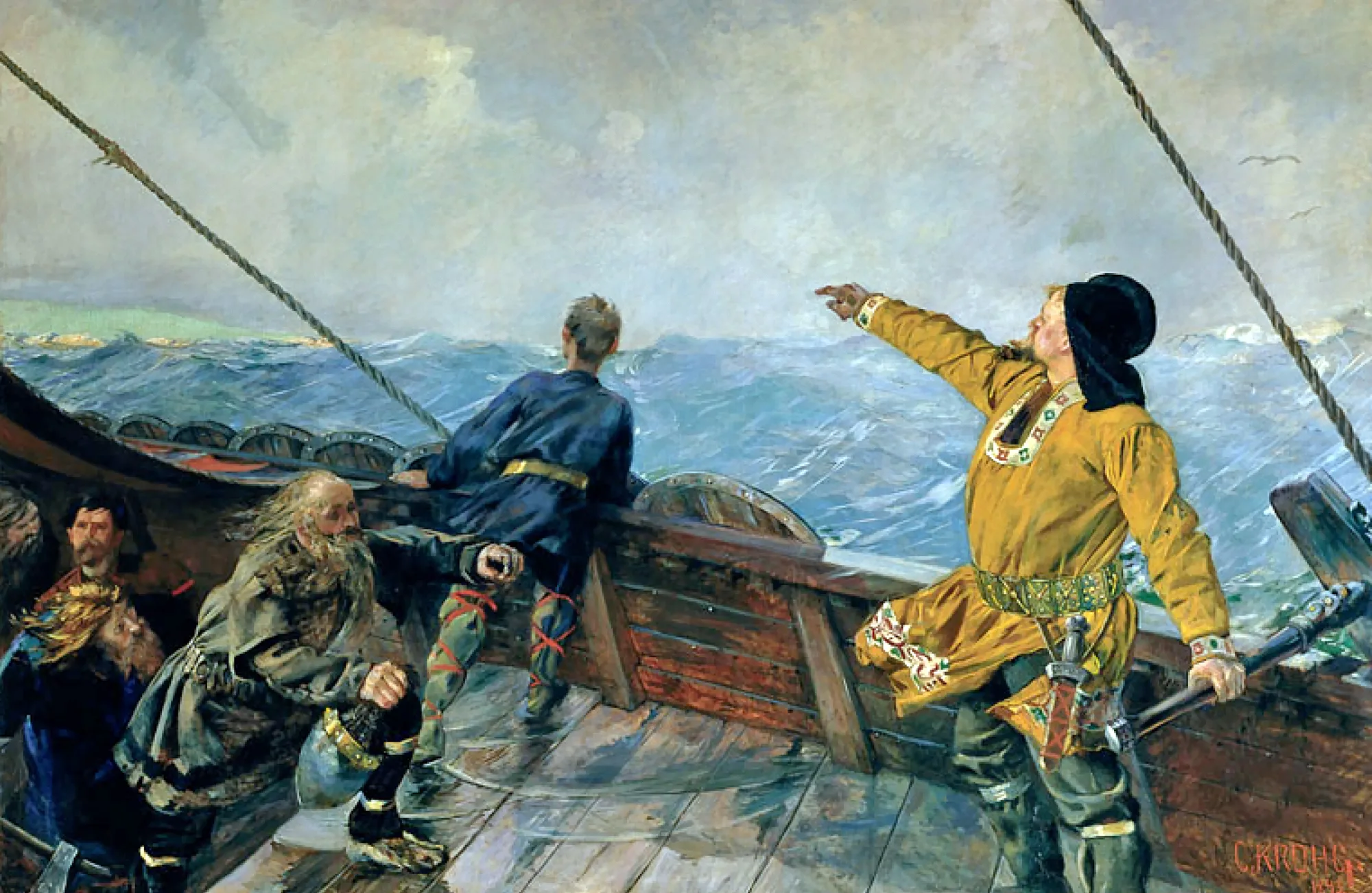
Some of the largest vessels measured between 20 and 35 meters and could weigh up to 60 tons. King Olav Haraldsson, for instance, had two knarrs carrying 130 men each. This ship type was essential in the colonization of the Faroe Islands, Iceland, Greenland, plus the discovery of North America. Leiv Eriksson was the first European in North America thanks to the Viking Age’s well-built seagoing ships. He himself sailed a Greenland knarr.
Famous Norwegian Viking Ships
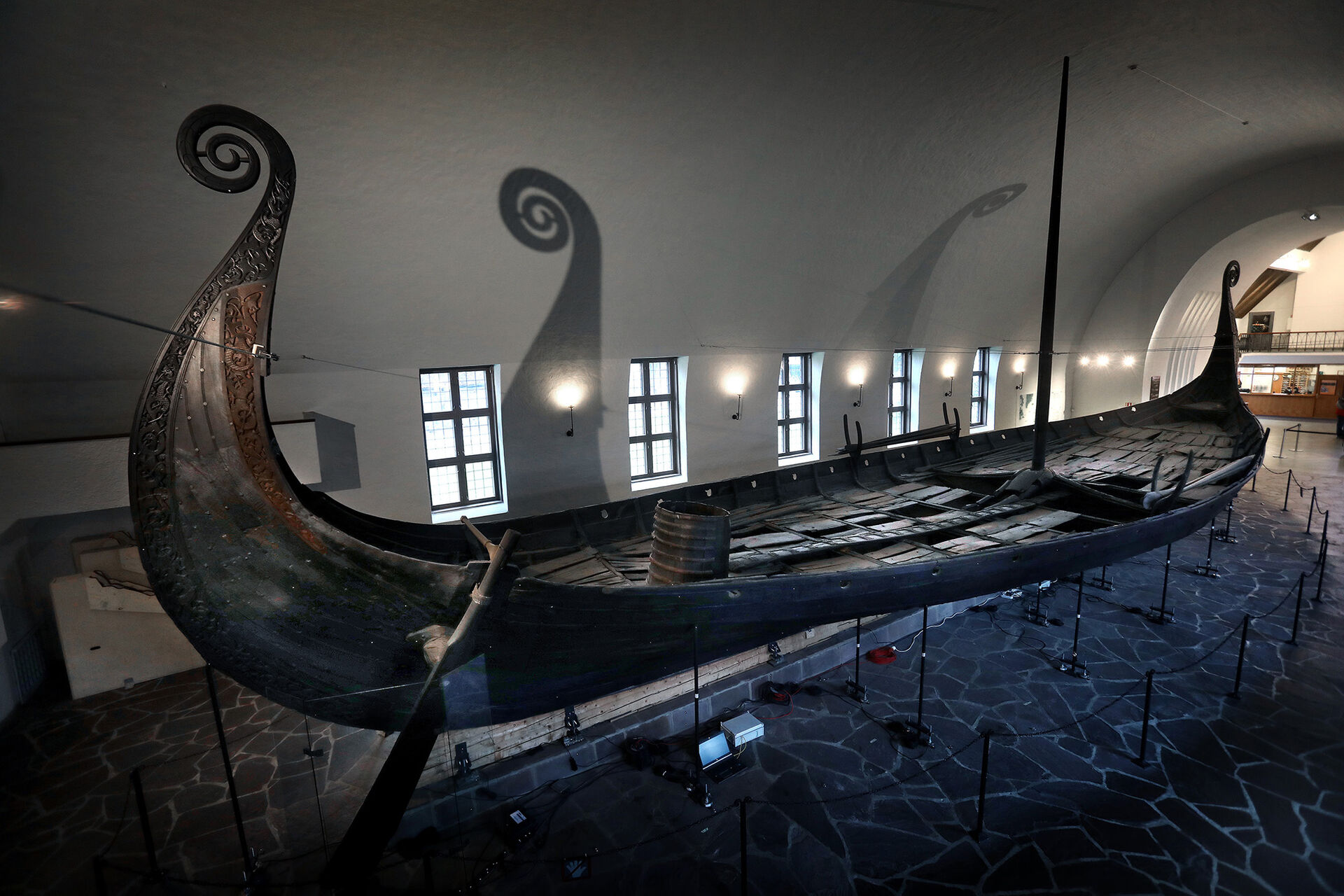
Oseberg Ship (c. 820)
The Oseberg mound has given us one of the richest Viking Age grave finds in the world. The 21-meter-long longship was built for both rowing and sailing. After 14 years at sea, the Oseberg Ship was brought ashore for the final time, serving as a burial ship for two women. Alongside the deceased, archaeologists discovered exquisite wood carvings, large quantities of animals, and much more. Today, the Oseberg Ship is on display at the Viking Ship Museum in Oslo.
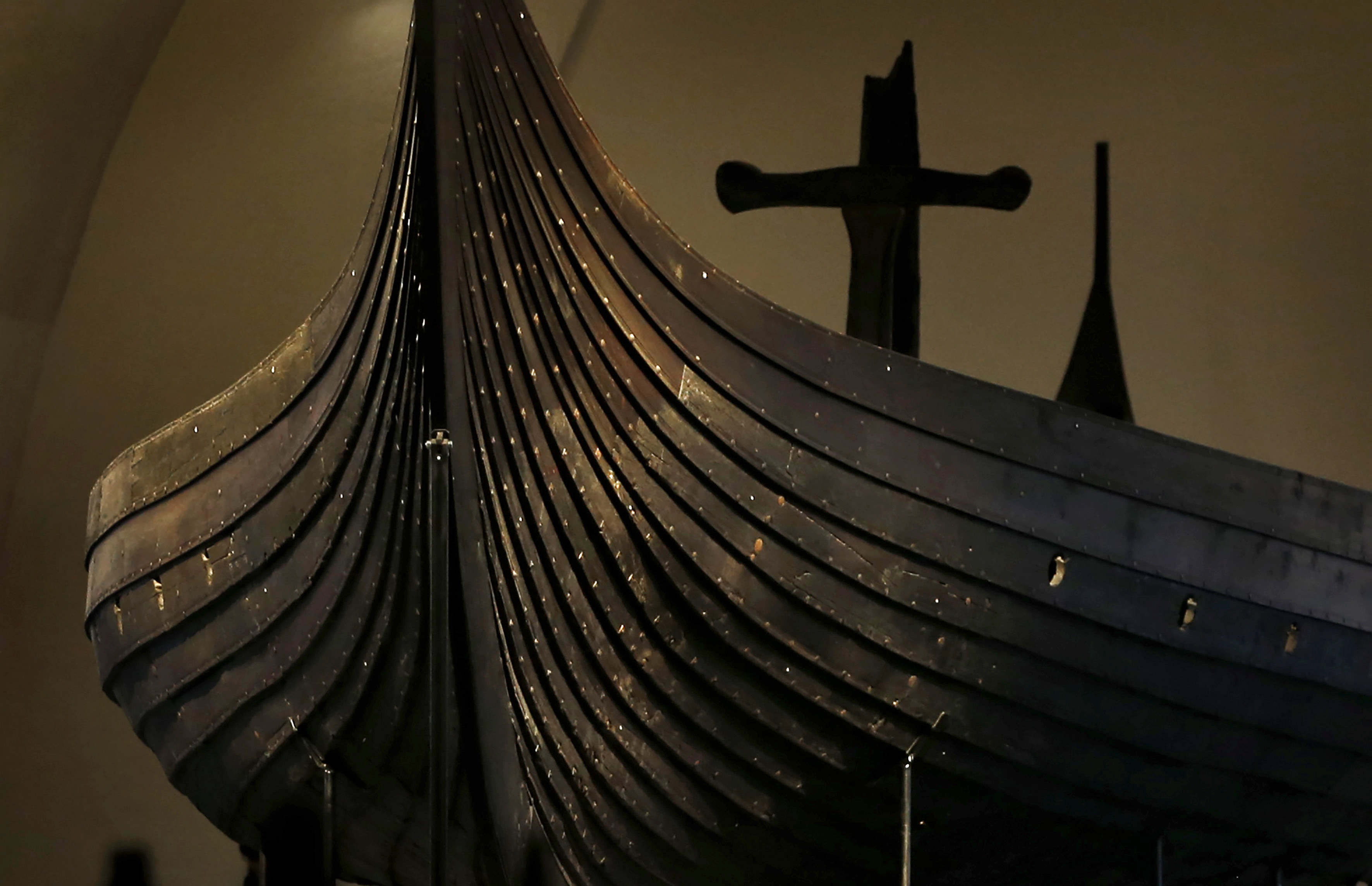
Gokstad Ship (c. 890)
The Gokstad Ship is Norway’s largest preserved Viking ship, measuring nearly 24 meters. When it was excavated, 32 shields were attached along each side of the ship, painted alternately yellow and black. In the bow, fragments of white woolen fabric with sewn red stripes were found, possibly remnants of a sail. The ship is currently exhibited at the Viking Ship Museum in Oslo.
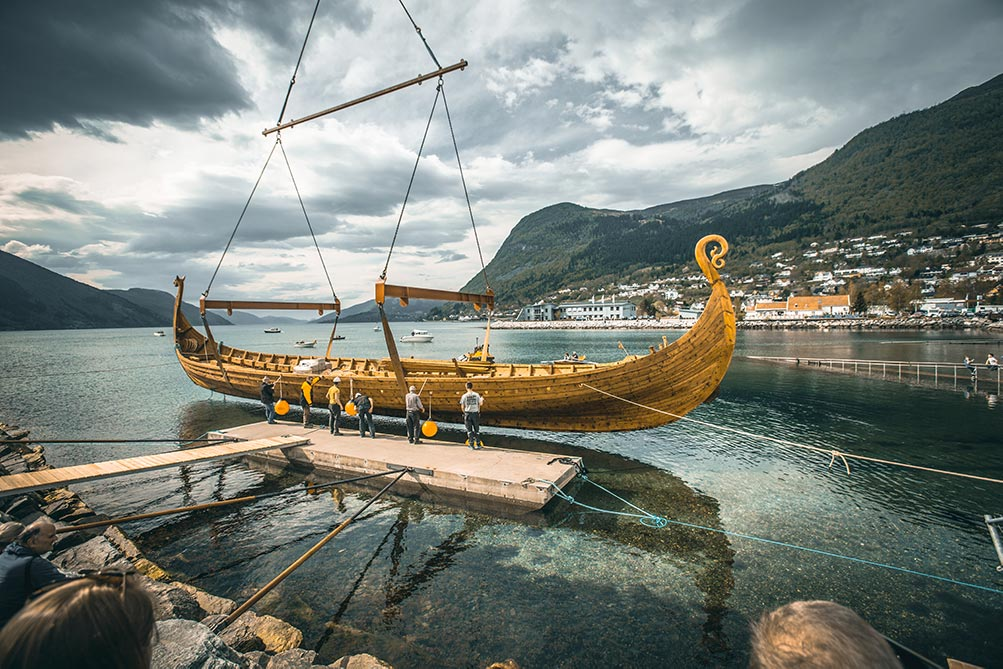
Myklebust Ship (late 800s – early 900s)
The Myklebust Ship is the largest Viking ship ever traced in Norway. A royal ship over 30 meters long, it was partially burned as a burial ship. A full-size replica was built in Nordfjord, where the original was found, forming the centerpiece of the Sagastad Knowledge Center in Nordfjordeid.
Ormen Lange (c. 1000)
Ormen Lange is the most famous Viking longship, though its existence is not definitively proven. According to the chronicler Snorre Sturlasson, it belonged to King Olav Tryggvason and was built in Trondheim. Often depicted with a gilded serpent figurehead, the ship is said to have been about 50 meters long with a four-meter-high prow. King Olav lost both the ship and his life in the Battle of Svolder (1000) against the Danish and Swedish kings. The ship became legendary because of this battle but was ultimately destroyed.
Visund (c. 1020)
Visund was a saga-viking ship said to have been built under the orders of Saint Olav in the 1020s. It was reportedly decorated with a gilded visund head, a horned bison, on the bow, likely of the busse type.
Ships Built for Gods — and for Status
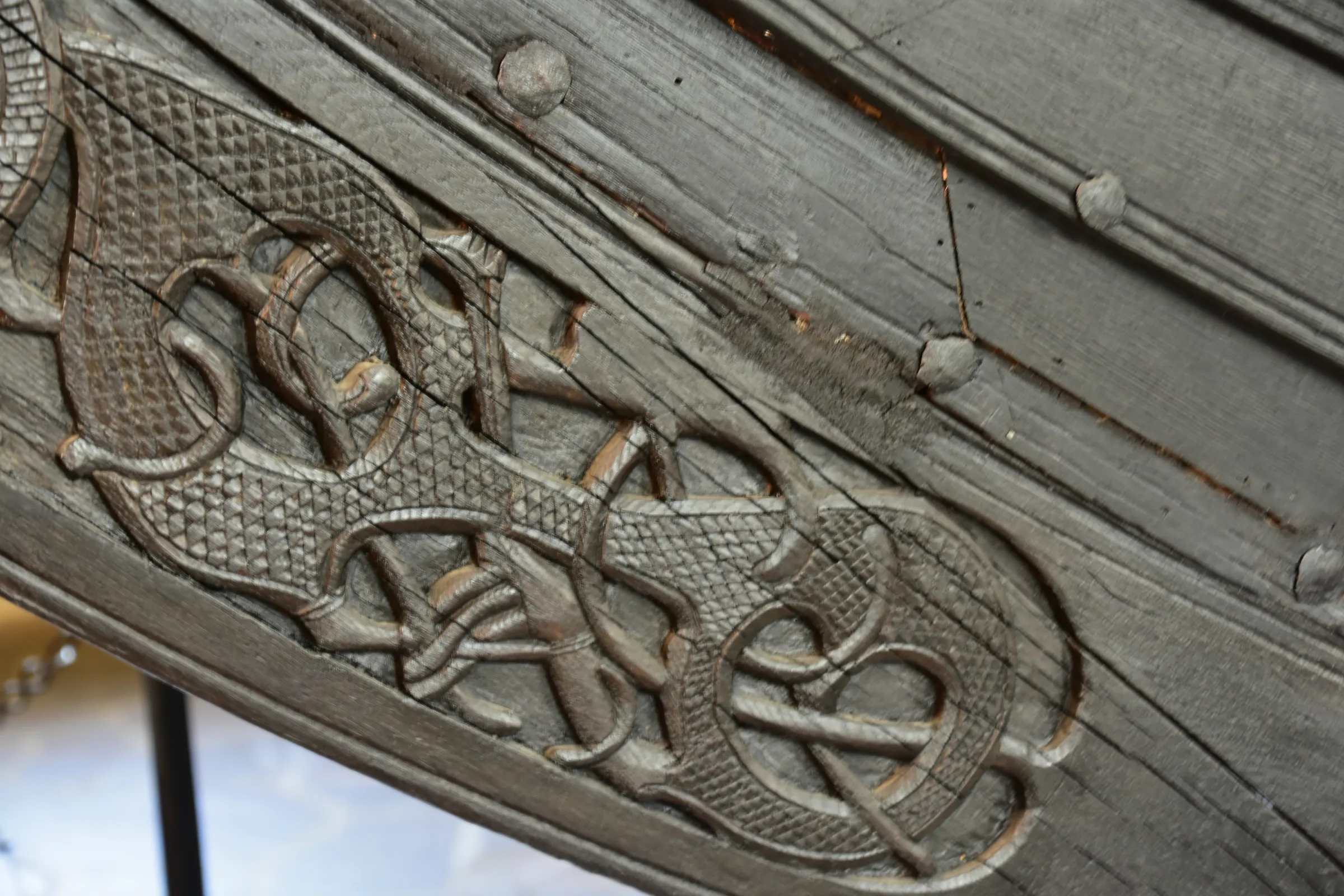
Viking ships were much more than just practical tools. They were status symbols.
Some vessels were exquisitely crafted, decorated with intricate woodcarvings from bow to stern. Even areas below deck, invisible to the eye, often featured elaborate ornamentation. Longships frequently carried carved dragon heads or other mythical creatures at the prow. Stylized animals, serpents, and dragons ran along the hull in detailed Norse ornamentation.
Shields mounted along the sides added colour as well as protection. Their sails, too, could be vividly coloured, making the fleet impossible to ignore.
“To be honest, not every Viking ship came with a carved dragon head,” Professor Sigurdsson laughs. “There was definitely a class difference.”
Professor Jon Vidar Sigurdsson“The grandest ships belonged to the chieftains. It was as if the chiefs arrived in the Rolls-Royce version, while the ordinary Vikings followed behind on scooters.”
The Essence of the Viking Age
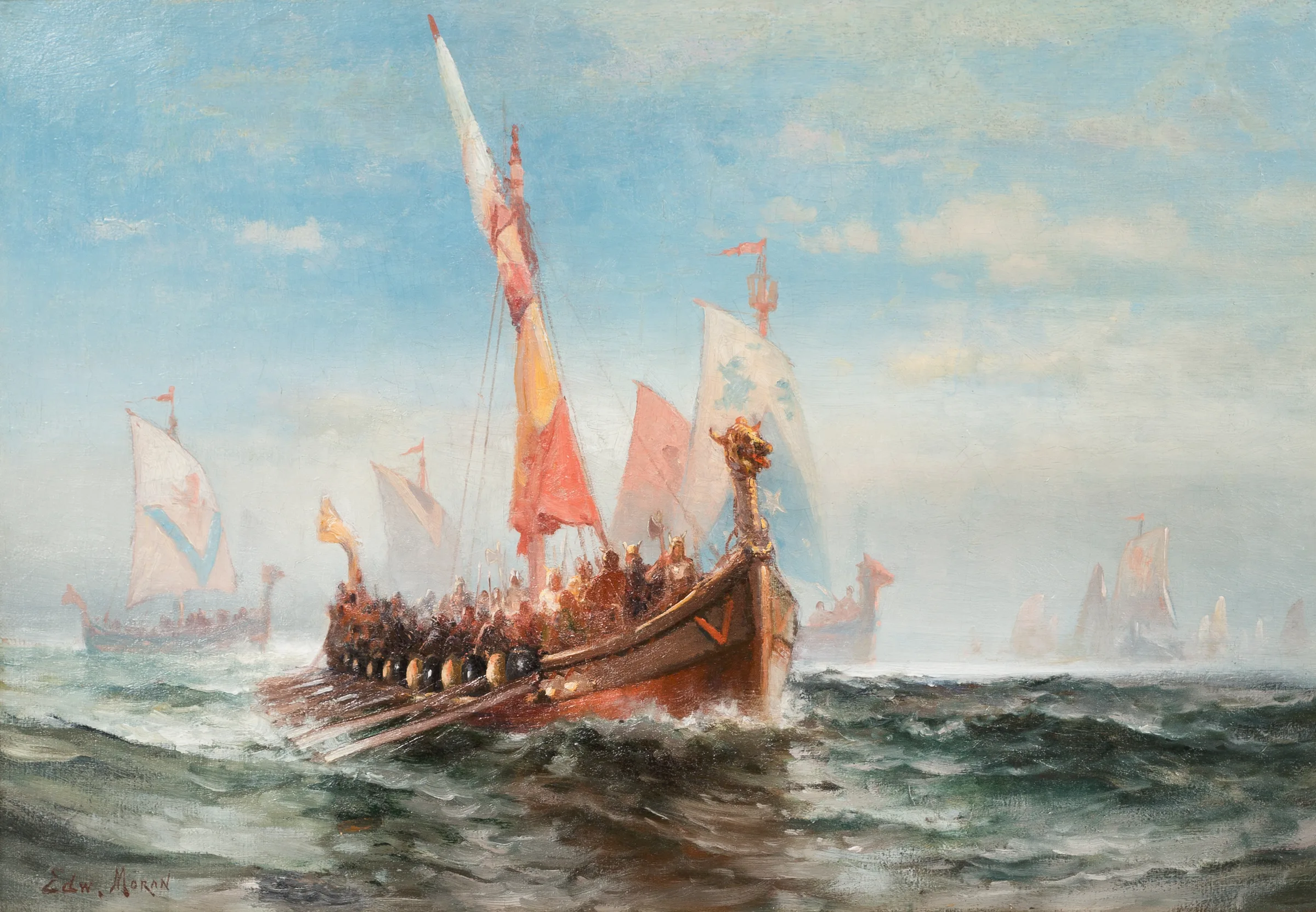
In many ways, Viking ships are the very essence of the Viking Age. They were the technology that made expansion possible.
“What impresses me most is how long the Vikings managed to maintain their power,” says Sigurdsson.
“They were outstanding shipbuilders, but they were also incredibly skilled at communication and cooperation across Scandinavia. Both in ship production, trade, politics, and warfare.”
Elegant longships helped them plunder. Trade ships helped them prosper. And together, they built an empire of influence that lasted for centuries.