The Graffer Bunad
A heritage of floral embroidery from Lom, dating back hundreds of years
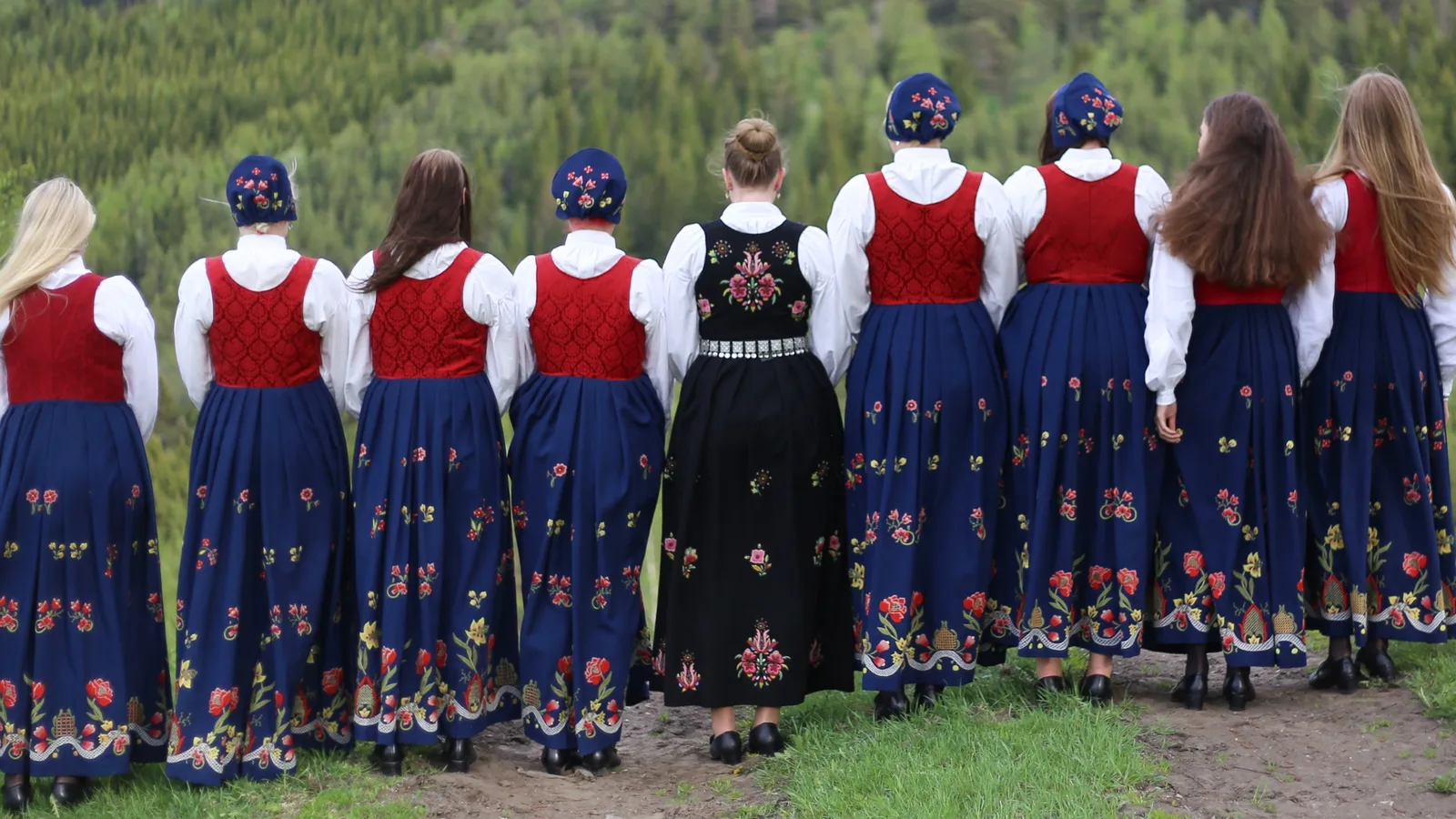
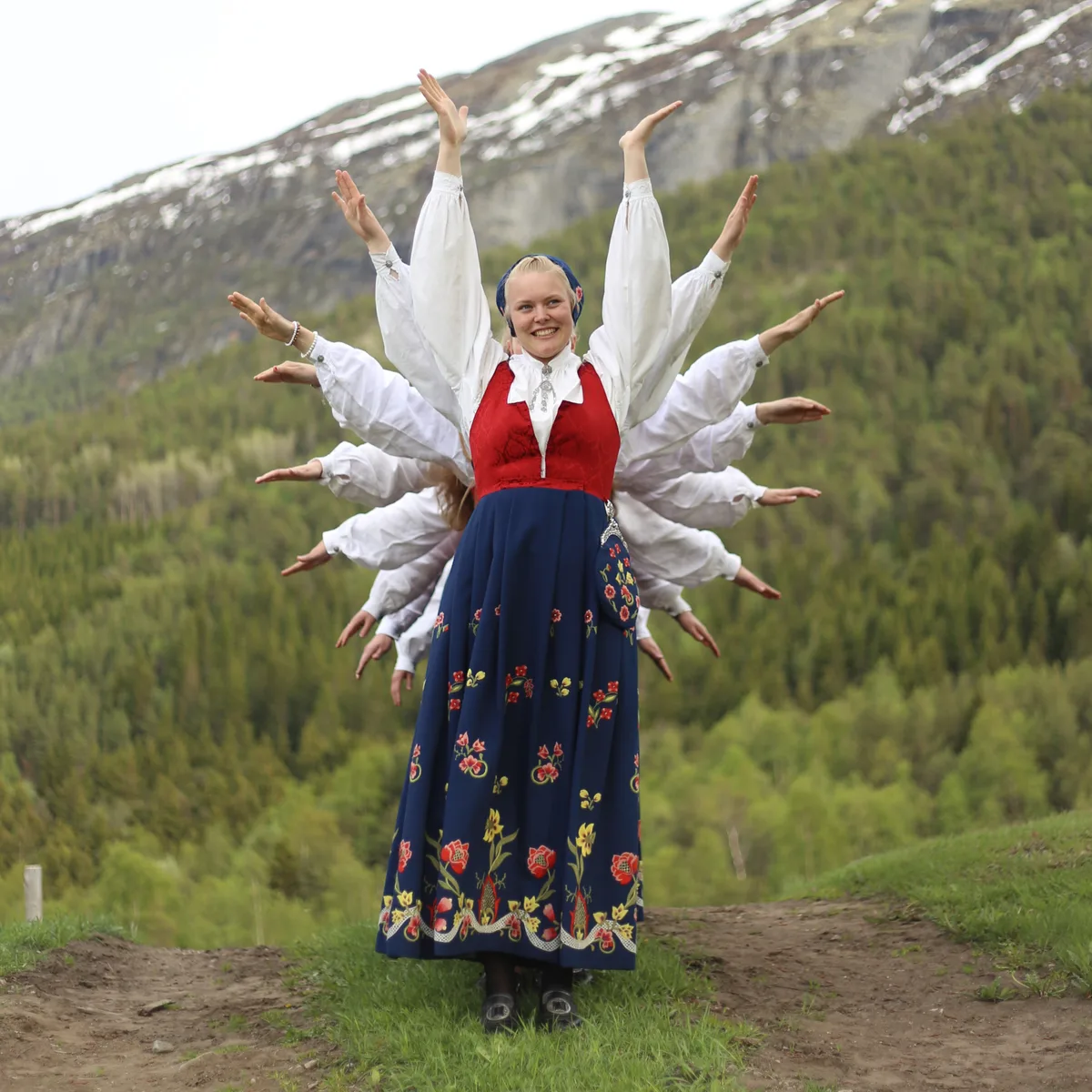
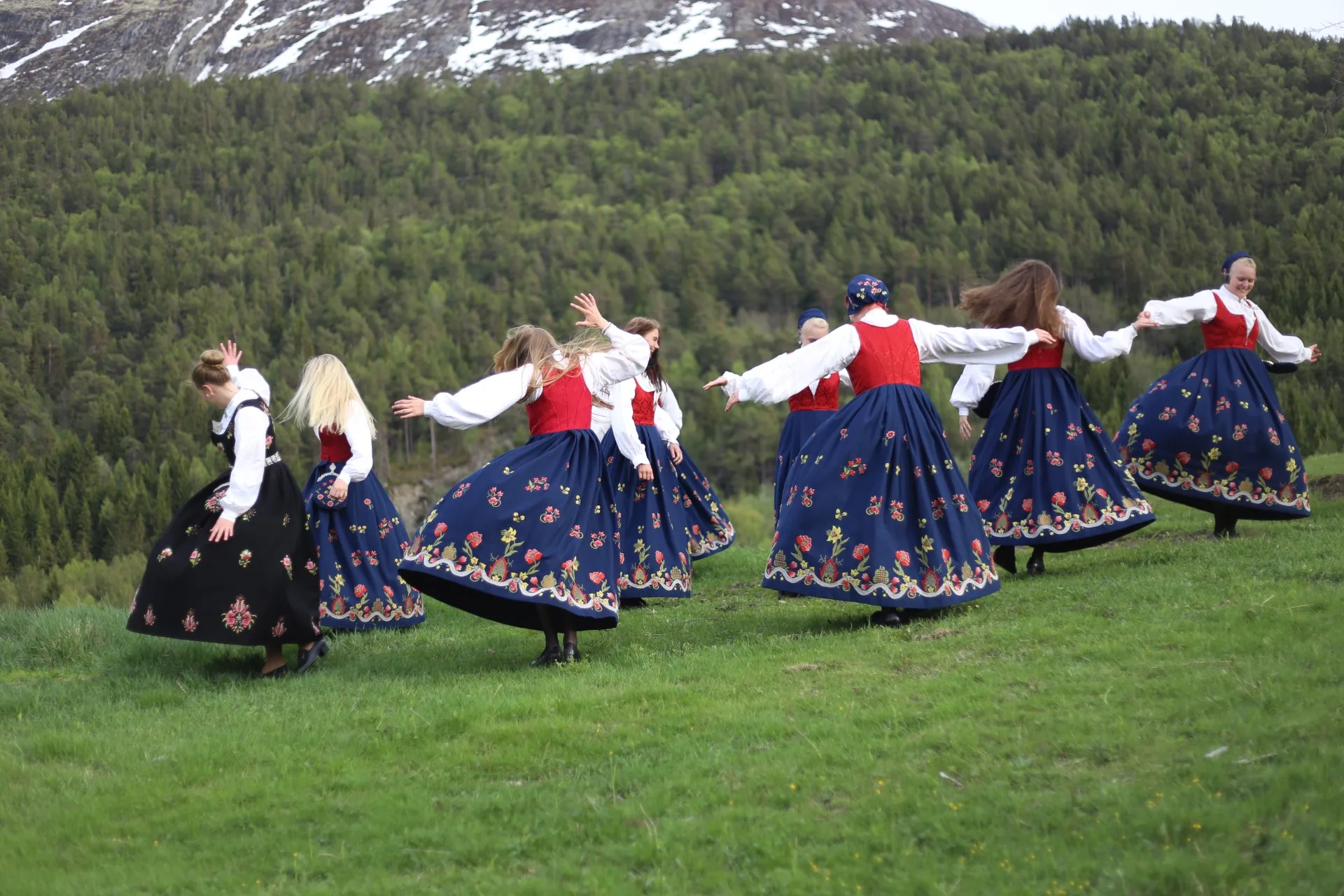
A stunning sight – often in red, white, and blue! The beautiful Graffer bunad originates from Lom in Gudbrandsdalen valley and carries a heritage that dates back hundreds of years.
A Story Written in Thread
The history of the Graffer bunad dates all the way back to the 18th century and is based on a skirt from that period, discovered at the Graffer farm in Lom. Over the course of the 1900s, the bunad evolved through three distinct periods, each shaping the version we know today.
The bunad officially gained its status in the 1930s, during a time when preserving traditional Norwegian embroidery and using native materials was of national importance. In those early days, the Graffer bunad was sewn with various bodice styles, and all parts of the outfit featured embroidery.
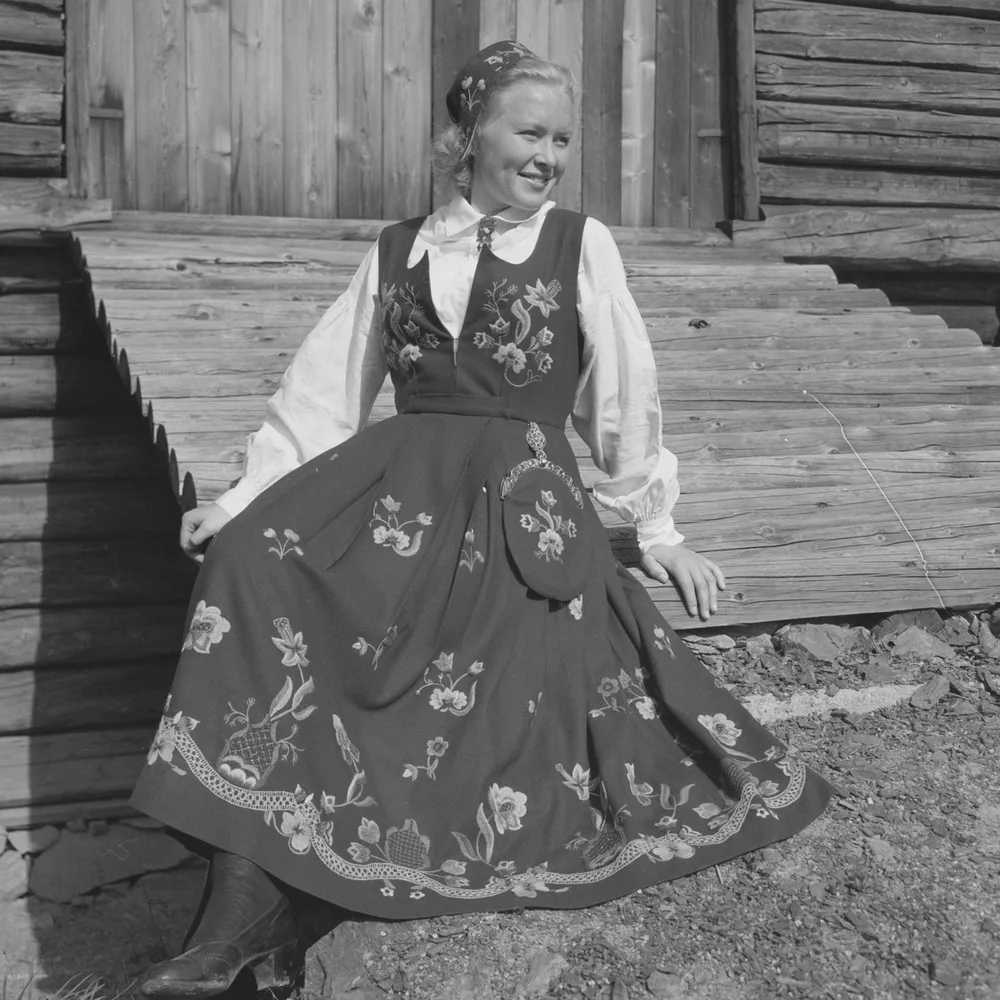
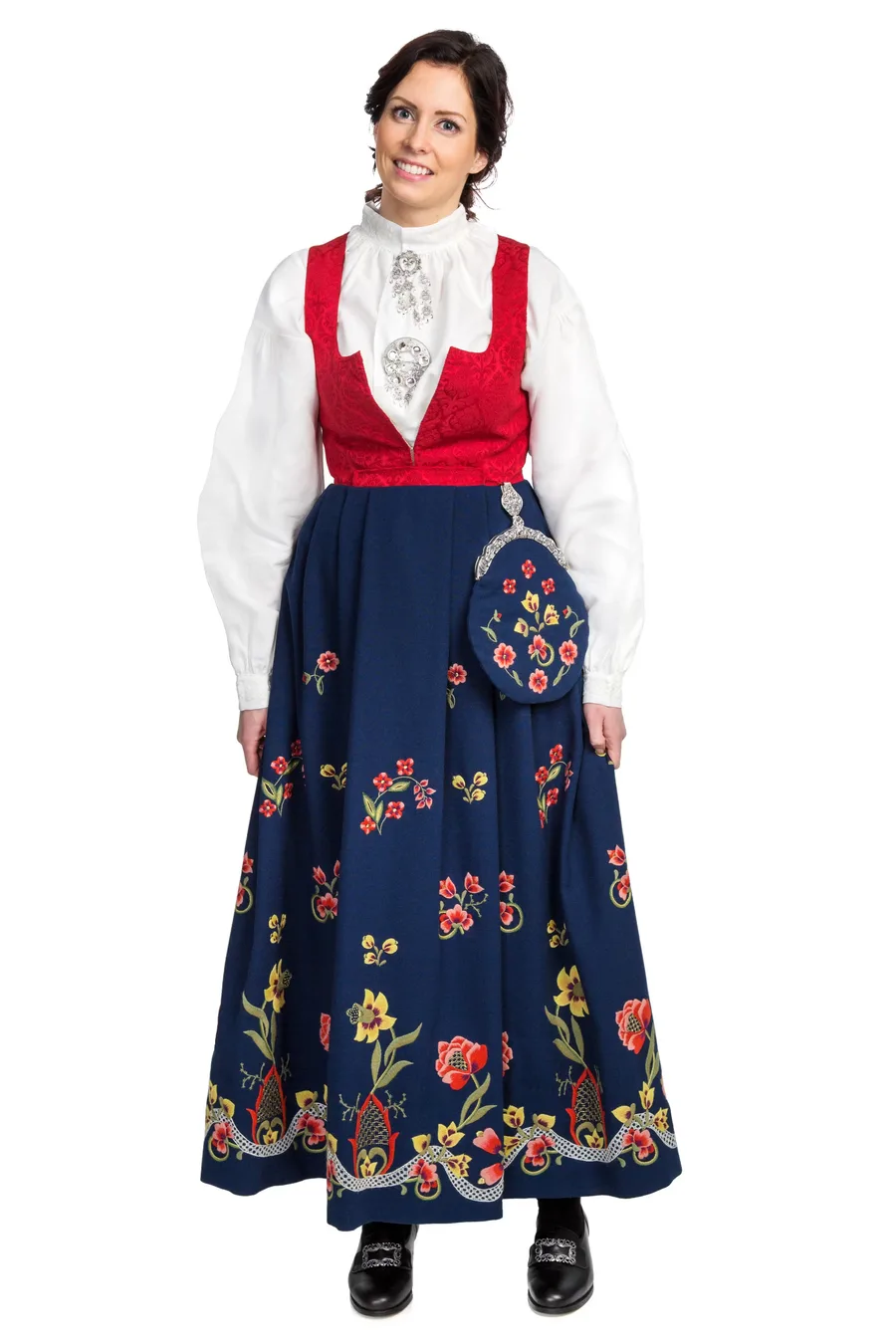
A revised version of the bunad was developed in 1952 by Gudbrandsdalen Husflidlag (Handicraft Association) in collaboration with the Graffer family. This is when the damask bodice was introduced. At the time, there was also renewed interest in reviving old sewing techniques. While the colors had previously varied, they were now standardized.
A shirt from Graffer farm was also copied and adopted as the official shirt to accompany the bunad. This is the version of the Graffer bunad that is most commonly produced today. It now comes in two variants:
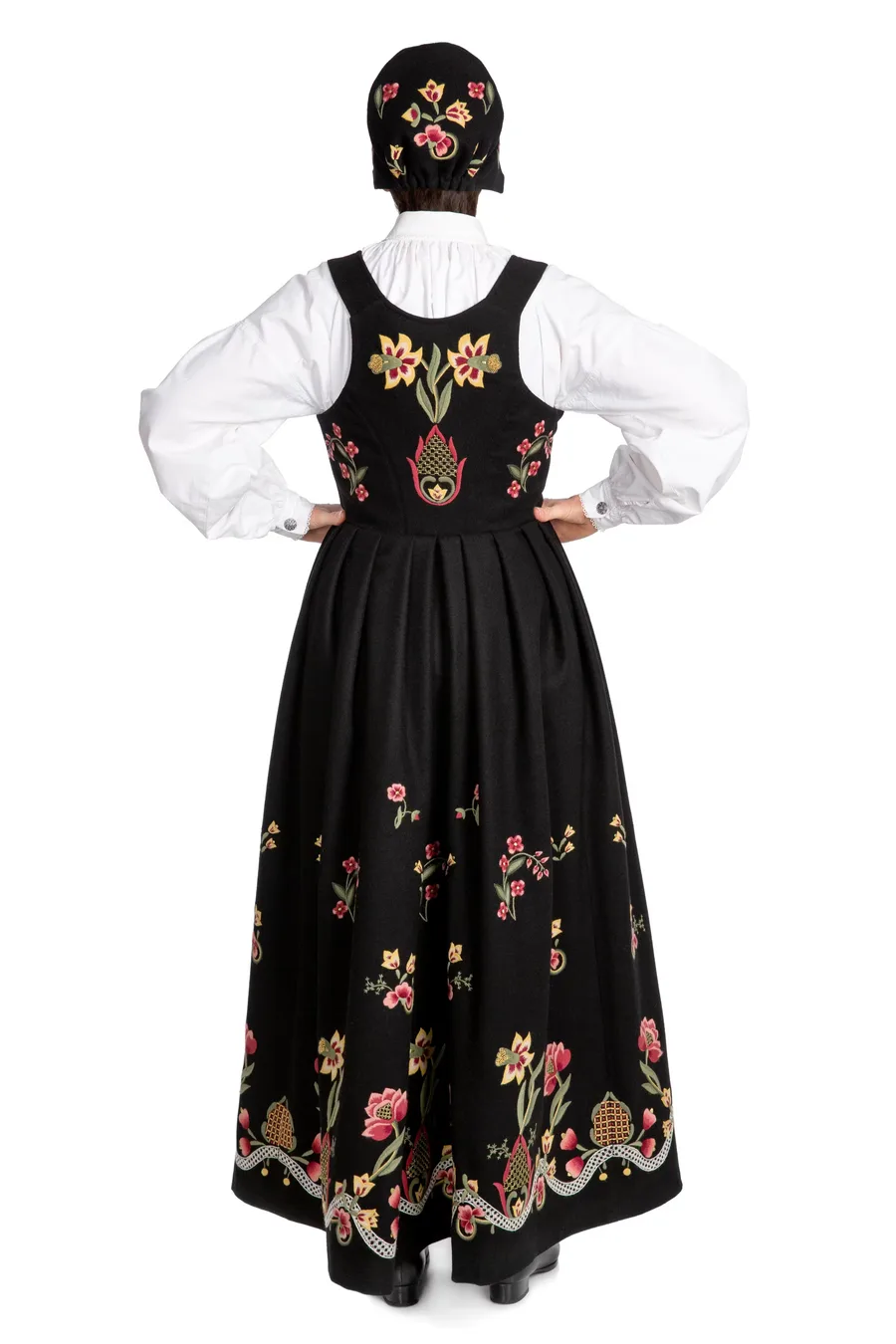
- Graffer with an embroidered bodice, using black or blue fabric for both the bodice and skirt
- Hand-sewn Graffer with a brocade bodice in red or green, paired with a blue skirt
The Garment
The skirt is adorned with multicolored wool embroidery and metallic thread. The design features a wide floral border at the hem and scattered floral motifs rising up the skirt.
The bodice is fastened in the front with hooks and sewn directly to the skirt.
There’s more to the gorgeous Graffer bunad. Let’s take a closer look.
The shirt
The Graffer bunad is paired with a traditional linen shirt, beautifully decorated with whitework embroidery.
The pocket
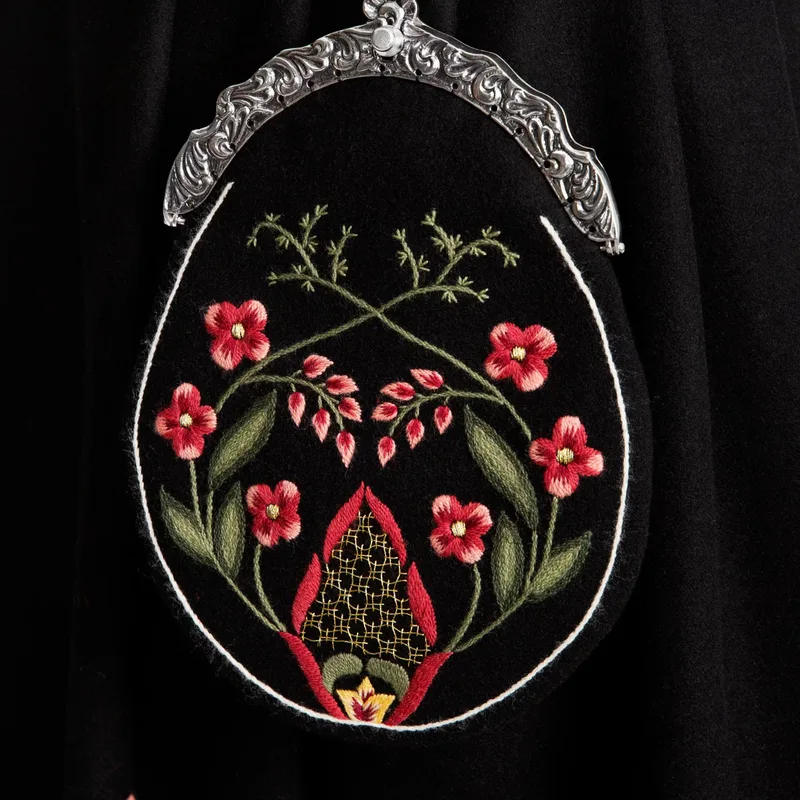
The bunad is often worn with a detachable pocket, made from the same fabric and embroidered with the same motif as the skirt.
Silver & Adornments
The silver jewelry
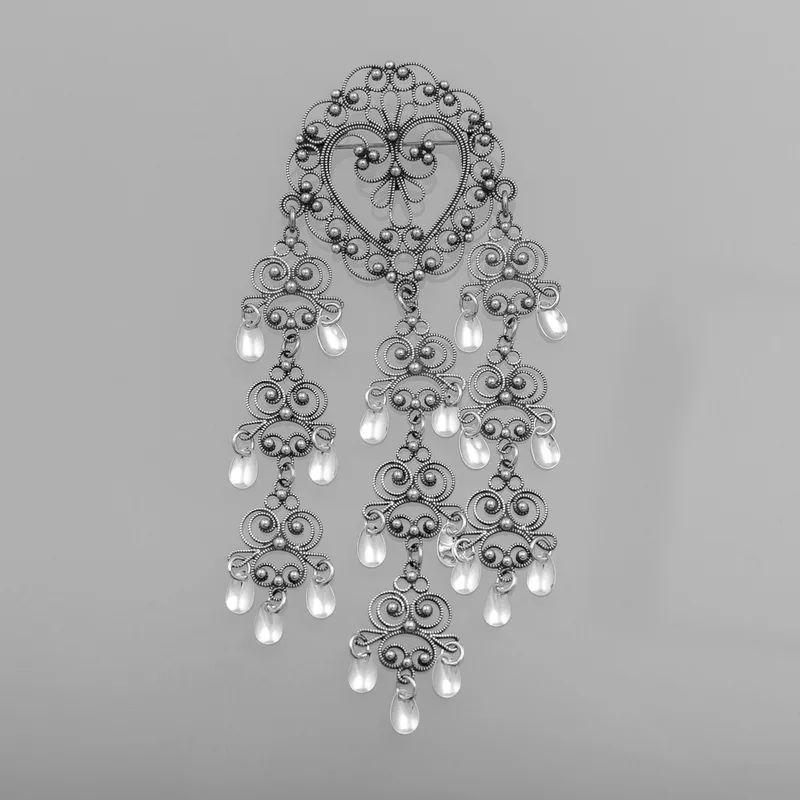
The silver typically used with the bunad is filigree silver, a popular style in the Gudbrandsdalen region. The most distinctive piece is the dingsilknapp, a large, ornate collar button with elaborate hanging filigree. This button design has been replicated for modern use, and some also wear a small brooch (sølje) beneath it. Both are fastened to the shirt. Various other types of silver jewelry are also used. Much of the fashion-inspired silver from the early 1900s was based on traditional Gudbrandsdalen designs; we’re talking delicate filigree dangles hanging from buttons or brooches. The brooches are often heart-shaped and may feature a crown on top.
The head piece
A traditional head piece has accompanied the Graffer bunad since its earliest version. It is made from the same fabric as the skirt, with a rounded crown that’s gathered at the back and sewn smoothly onto a front band. The front comes down toward the ears but has no ties. Both the crown and the front piece are embroidered, with the same motif as the skirt.
Outerwear
The Graffer bunad is typically worn with either a jacket (often referred to as a trøye or kofte) or a cape (kep), both made from the same fabric as the bunad.
A Living Legacy
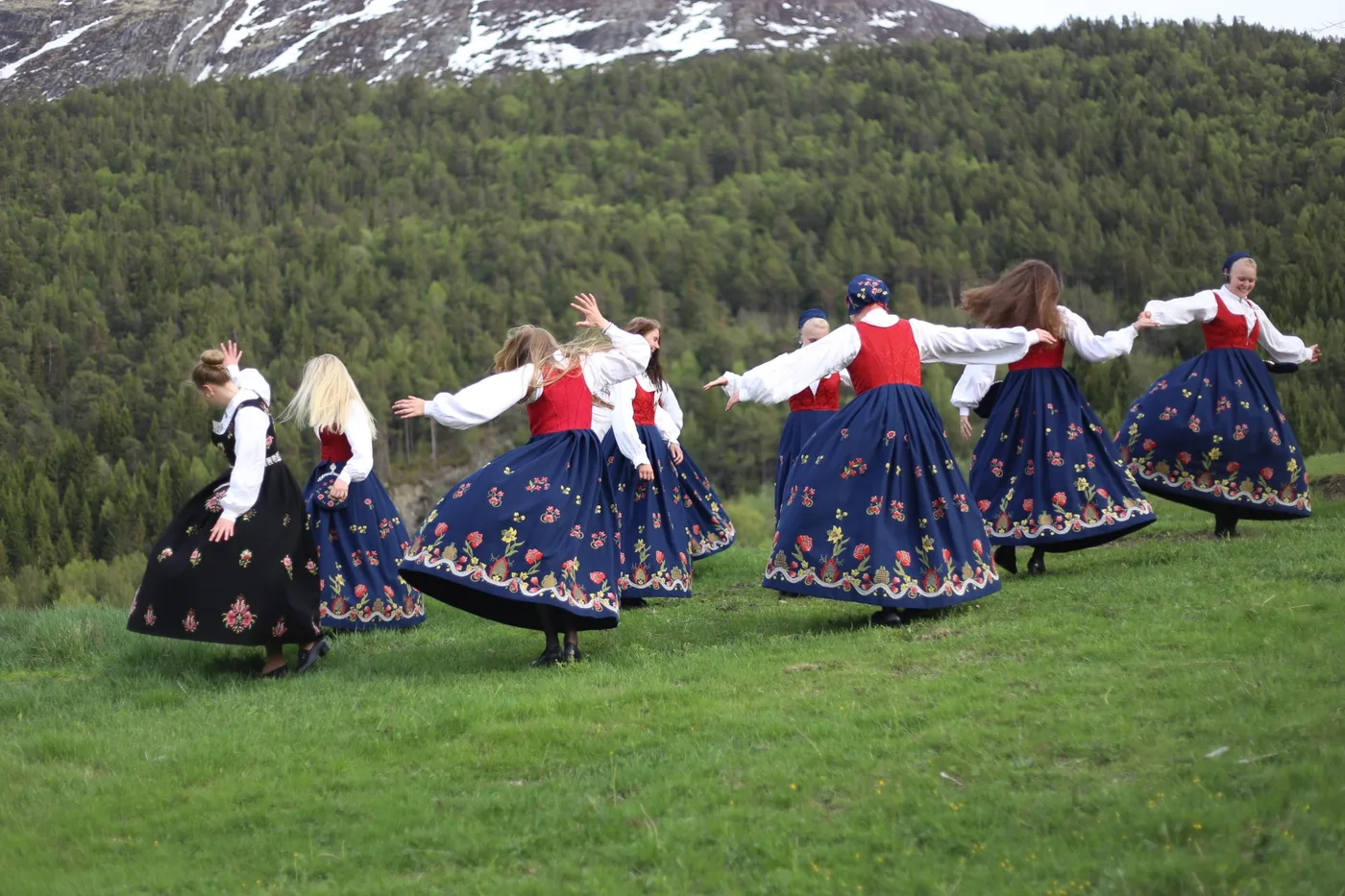
There are several folk myths surrounding the Graffer bunad. Some claim it can only be worn by those with ties to the Graffer farm. Others say it isn’t tied to a specific place at all and is meant for anyone, anywhere in the country. One thing is for sure, though. The bunad gained immense popularity when it was first introduced and is now worn across large parts of Norway.
Still, it was launched as a regional bunad from Gudbrandsdalen; that’s where its roots lie.
Husfliden Lillehammer holds a unique agreement with the Graffer family in Lom, giving them exclusive rights to produce the Graffer bunad. However, you can also purchase a materials kit from Husfliden and sew it yourself, of course. Local craftsmanship remains essential: the wool fabric used in the bunad is produced by Gudbrandsdalens Uldvarefabrik in Lillehammer, and the embroidery is done by one of Husfliden’s home-based bunad makers in Norway.
No wonder this bunad masterpiece is popular!