Norway’s Liberation Day
May 8, 1945 – From occupation to freedom
May 8, 1945, marks one of the most important days in Norwegian history: the liberation from five years of Nazi occupation. Every year, this day is celebrated as a tribute to freedom and in memory of those who fought and sacrificed everything for a free Norway.
Peace at Last
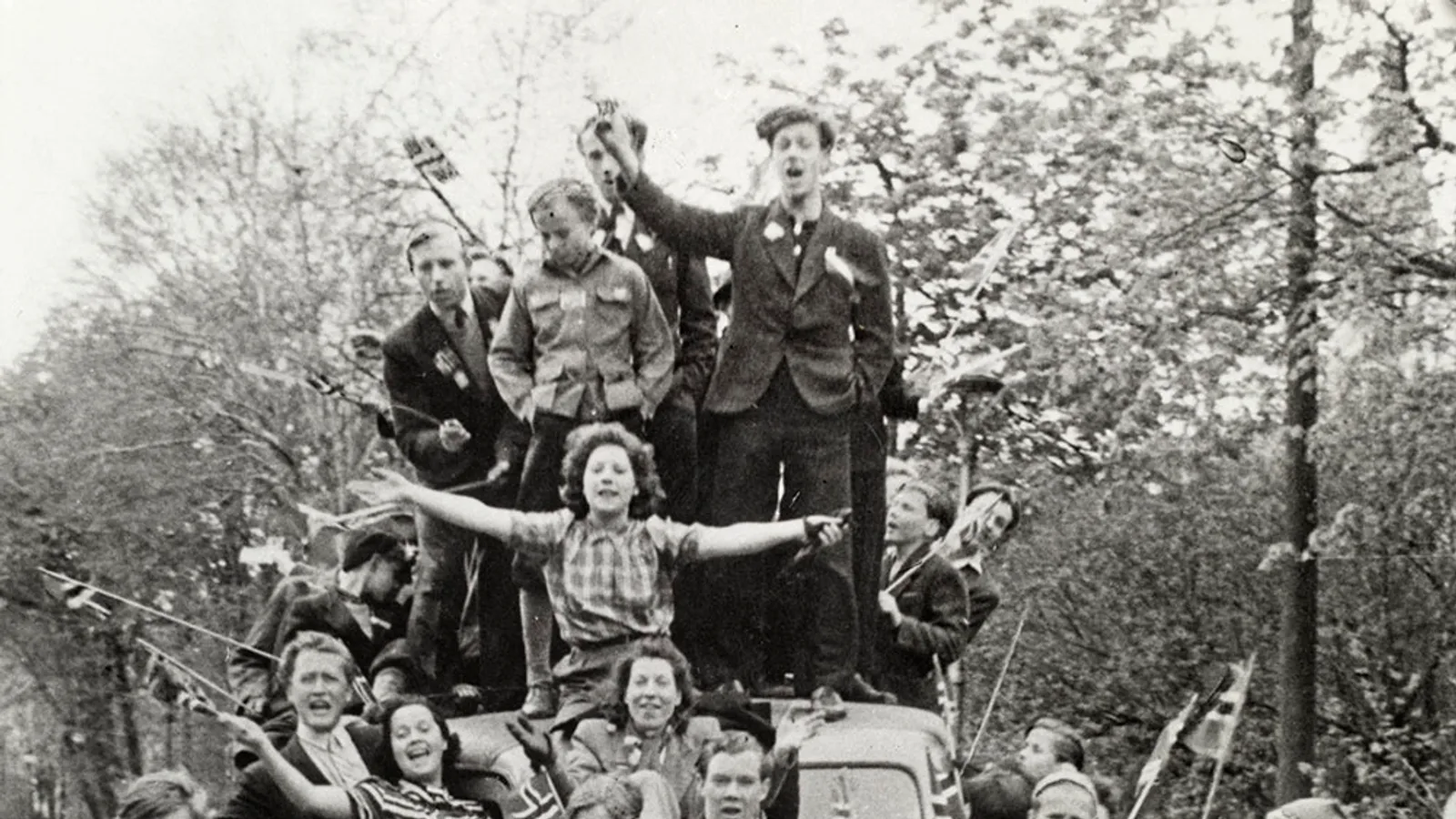
In May, the Norwegian spring is at its most beautiful. Tuesday, May 8, 1945, was no exception. Peace had come! The war was over! Norwegian flags were raised across the country.
According to the newspaper Østerdølen, shops and offices closed. At schools, patriotic songs were sung, and children –who, as the paper described, “showed up with flags in their hands and pinned to their chests”– were sent home and given the rest of the day off, as well as the following day. In the afternoon, church bells rang out from every church in the country.
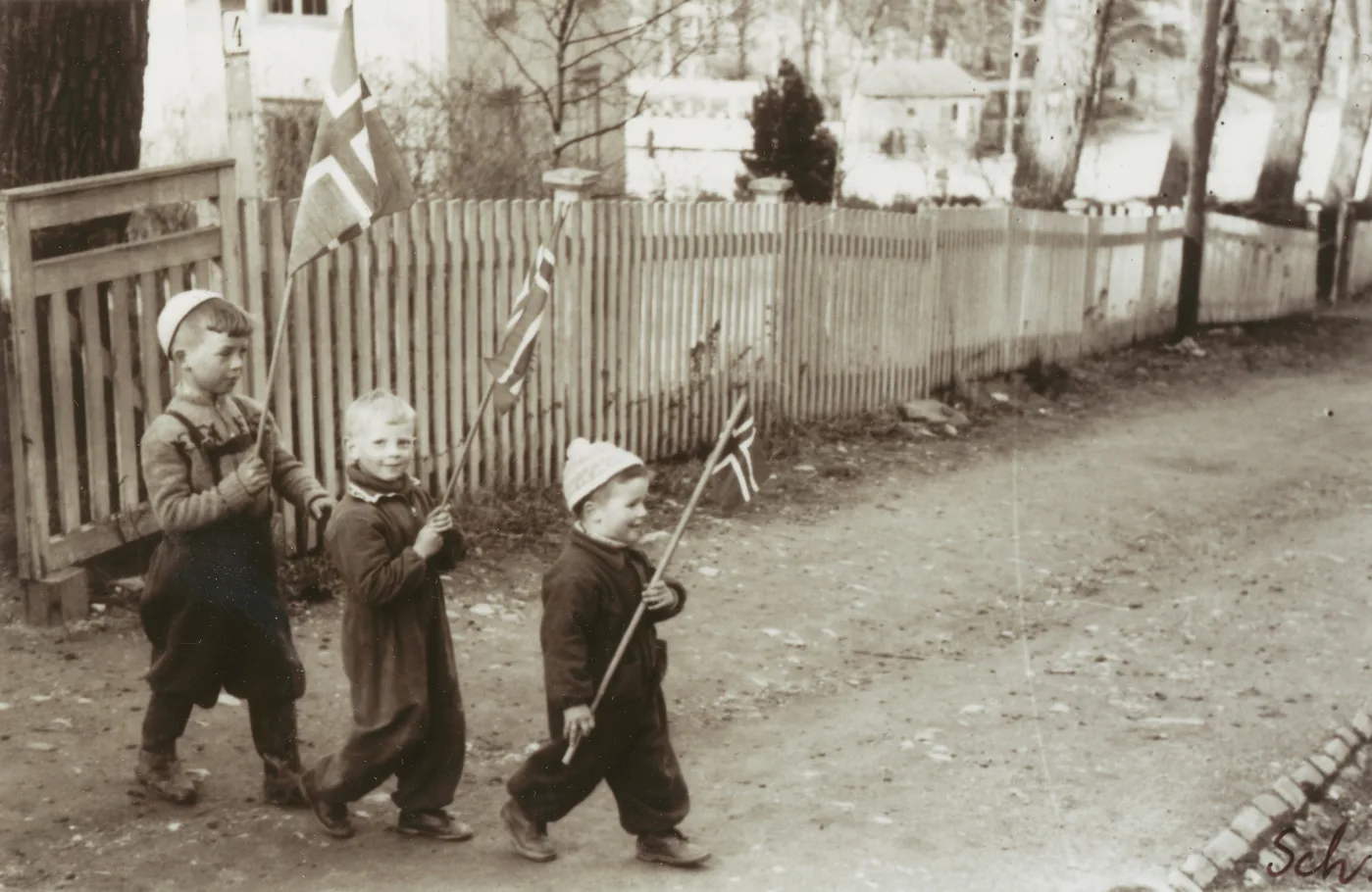
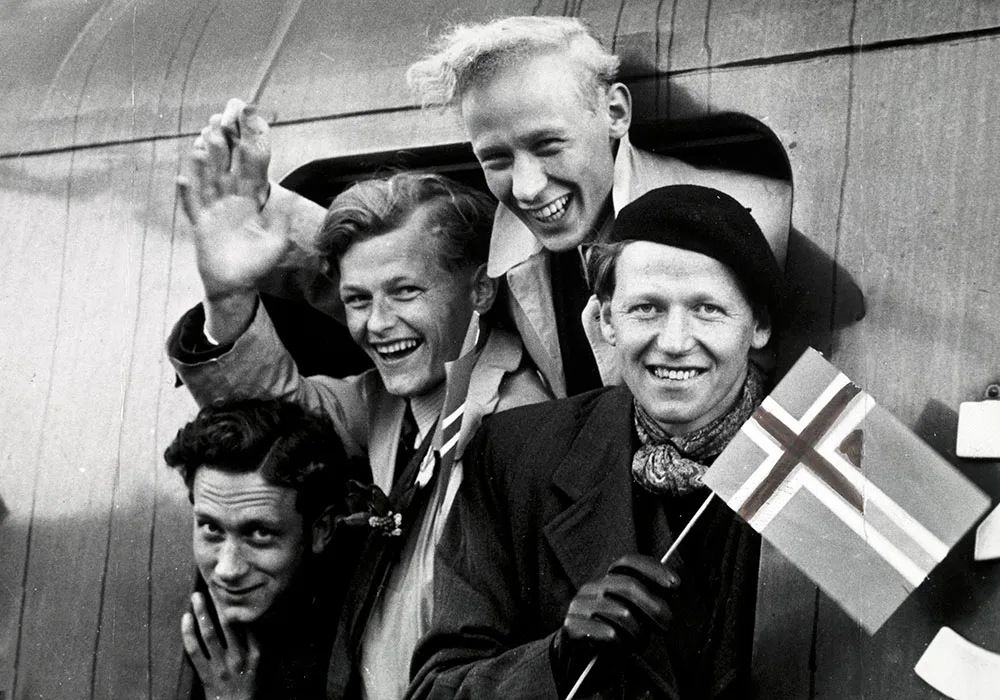
The days following Norway’s liberation in May 1945 were a fairy tale of joy and happiness; these days were filled with Norwegian flags in red, blue and white. There was cheering, songs, and powerful, hopeful speeches. People reclaimed their radios, which they had been forced to surrender in August 1941. Through them, they could finally hear the voices of the King of Norway, the Prime Minister, and the Commander-in-Chief, Crown Prince Olav’s address to the Home Guard. Many sources describe the sheer euphoria and deep emotional relief of those days. The muzzle had been lifted and people could finally speak and write freely. It was freedom. At last.
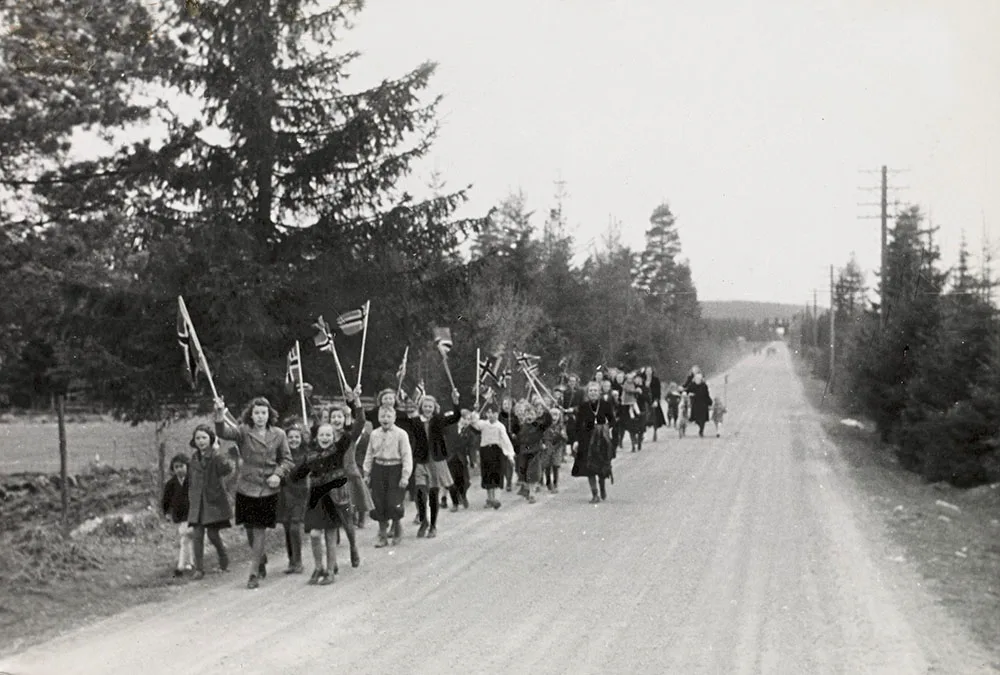
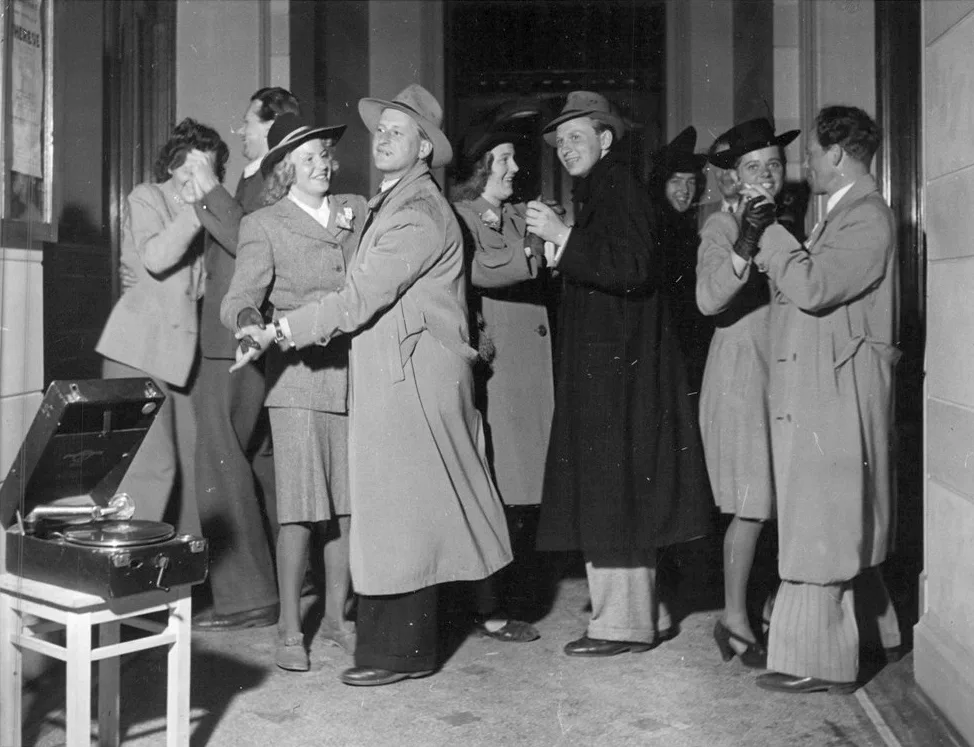
Celebrations and parades unfolded in towns and villages across the country in those May days. The celebration lasted. People gathered for public festivities – some entirely spontaneous, others more organized. On Ascension Day, Thursday, May 10, peace celebrations took place in many communities. Choirs and marching bands participated, and they stayed busy throughout the spring. In fact, the Ytre Rendal Brass Band had over ten performances between the Liberation Day and Midsummer. On Liberation Day itself, some bands played from dawn to dusk. For example, the Folldal Janitsjar Band reportedly began playing at six in the morning and continued until late evening. After five long years of war, there was much to celebrate! Norway as a nation was rejoiced.
The Five Years of Darkness
World War II began when Nazi Germany invaded Poland on September 1, 1939. Norway was drawn into the conflict when German forces launched a surprise attack on April 9th, 1940, quickly occupying the country. The Norwegian King and government fled into exile, and the nation’s administration was taken over by the German occupation authorities, led by the brutal Reichskommissar Josef Terboven.
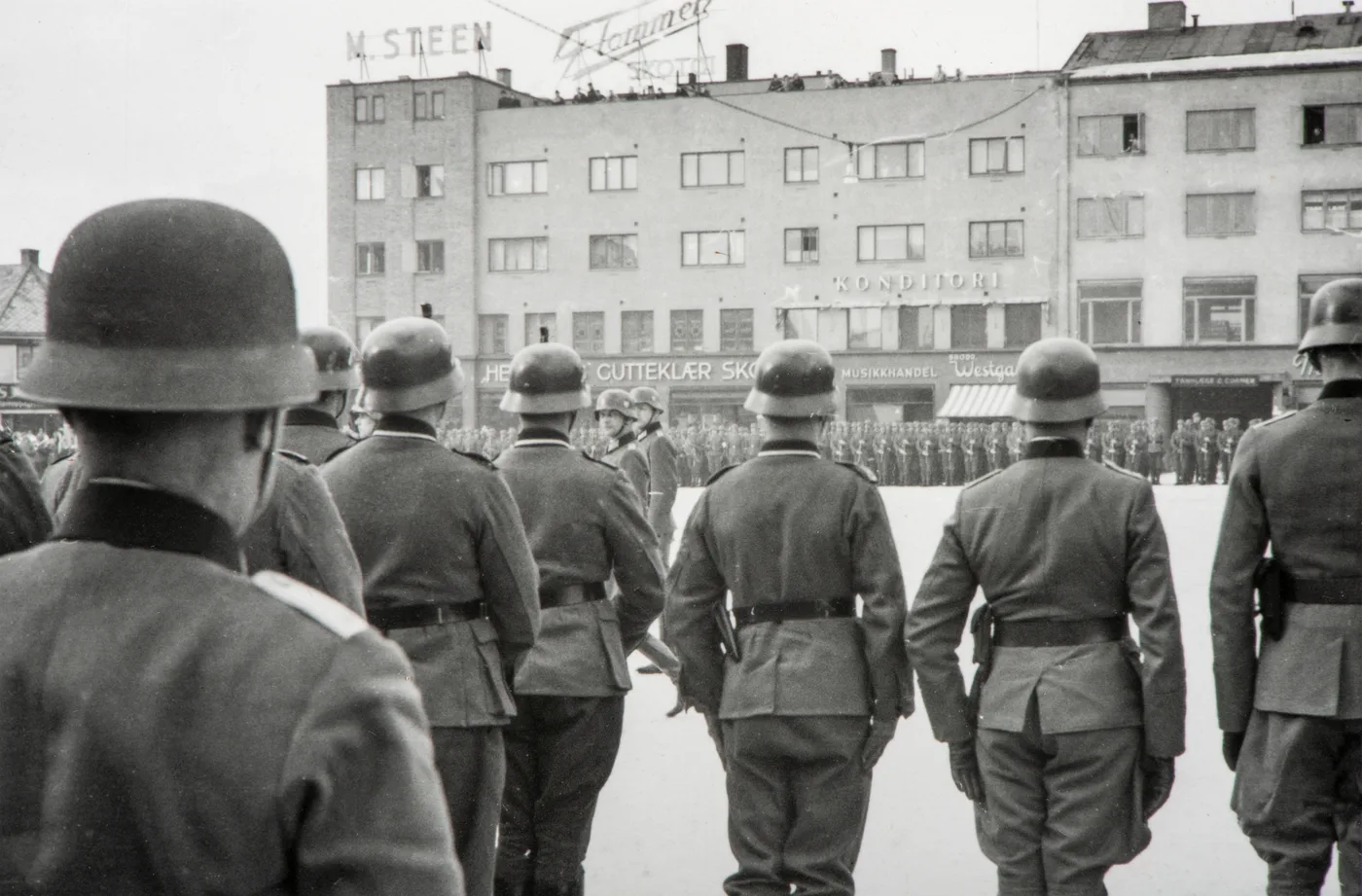
Throughout the war, the Norwegian resistance movement grew. Quietly but steadily. Men and women risked their lives as couriers, saboteurs, radio operators, and helpers for those fleeing persecution. Meanwhile, Norway’s resources were exploited by the occupiers, and Nazi ideology was pushed through propaganda, surveillance, and harsh reprisals.
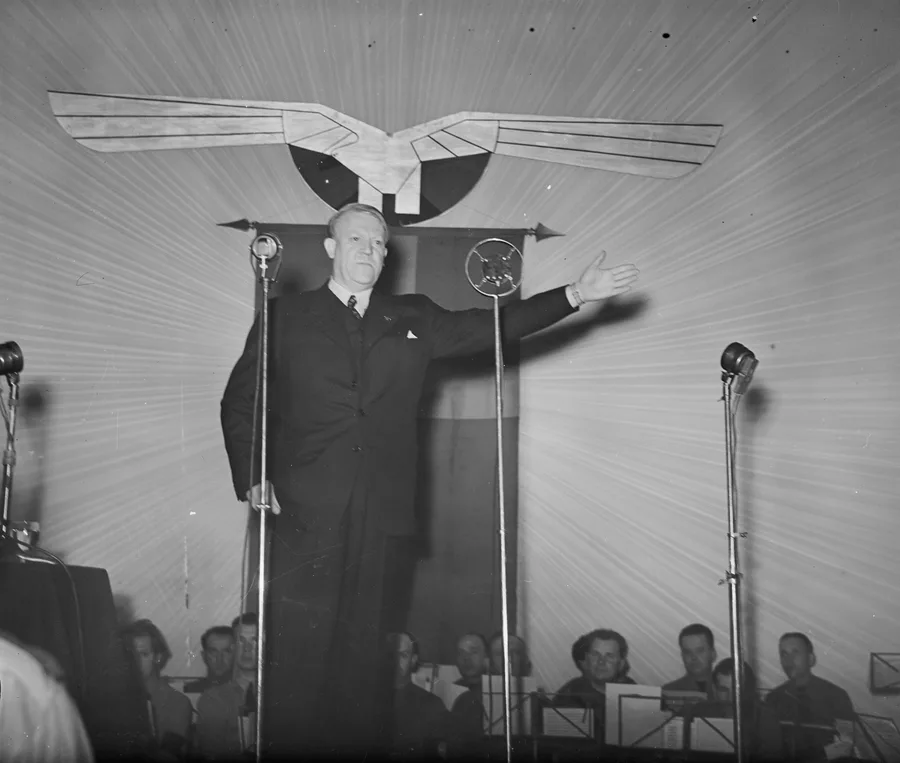
During the war, many Norwegians used small everyday objects as subtle symbols of resistance against the German occupiers. Among these symbols were the paperclip, the comb, the red Christmas hat (nisselue), and the Norwegian flag.
Symbols of Resistance

The paperclip worn in the lapel quietly signaled: “We stand together.” Its ability to hold things together was why it was chosen.
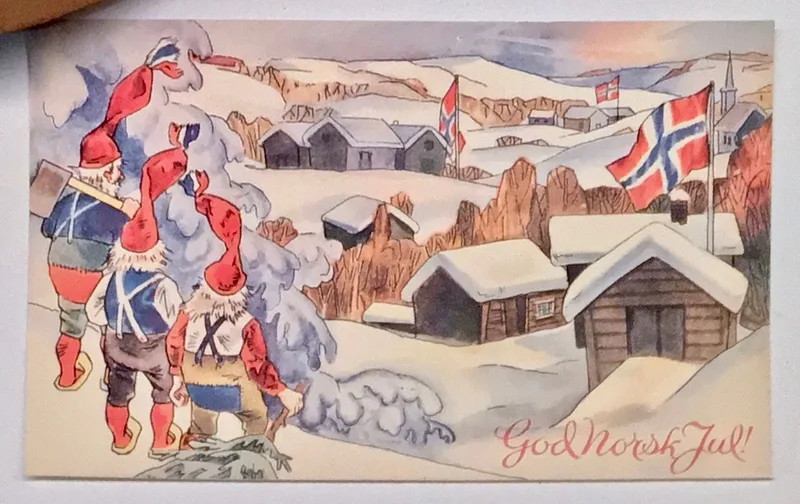
The red Christmas hat (nisselue) became a symbol of protest against the Nazi regime.
A paperclip worn in the lapel of one’s jacket quietly signaled to others, “We stand together.” As soon as such expressions of dissent were discovered, they were banned, though. Therefore, being caught with a paperclip in your lapel typically led to arrest and fines. Today, you can buy beautiful jewelry featuring the paperclip and the Norwegian flag at its heart.
A simple comb in one’s jacket pocket could carry the message, “We can take care of ourselves.”
The Norwegian flag remained a powerful emblem of national identity and resistance. So too did the King’s monogram. It was an H for Haakon intertwined with the number 7. A quiet but proud tribute to King Haakon VII and the legitimate Norwegian government in exile.
Tension Builds: Spring 1945
As Hitler’s Third Reich began collapsing in April 1945, uncertainty gripped Norway. Over 300 000 German soldiers were stationed in the country, and many feared that Terboven and the most fanatical Nazis would refuse to surrender.
But then Berlin fell. And Adolf Hitler committed suicide on April 30. His successor, Karl Dönitz, ordered a full surrender.
- April 30, 1945 Hitler commits suicide in Berlin. His successor Dönitz orders full surrender.
- May 8, 21:10 General Franz Böhme, the top German commander in Norway, receives the formal order to capitulate.
- May 8 Josef Terboven kills himself by detonating dynamite in a bunker at Skaugum. Other Nazi leaders also take their own lives.
- May 9 Vidkun Quisling turns himself in to the police and is arrested.
- May 10 Norwegian troops trained abroad cross the border. Peace celebrations erupt across the country.
- June 7, 1945 King Haakon VII returns to a jubilant nation. The legitimate Norwegian government resumes power.
A Dramatic but Peaceful Transition
Meanwhile, the Norwegian home forces, consisting of underground resistance groups and police troops trained in Sweden, had been preparing in secret to take control. With the motto “Dignity, calmness, discipline,” they helped ensure a smooth and civil handover without descending into chaos or revenge.
The first British and American soldiers arrived in the days following the surrender. Norwegian troops trained abroad crossed the border starting May 10th. King Haakon VII returned to a jubilant nation on June 7th, and the legitimate Norwegian government resumed power.
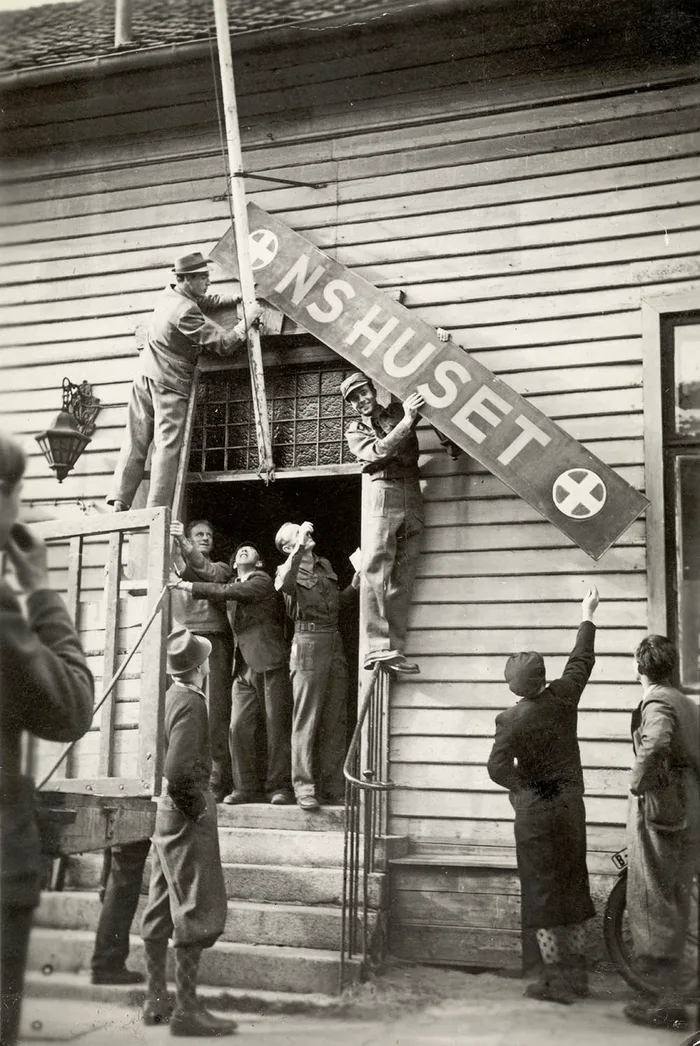
After the German capitulation, German forces were ordered to withdraw from key cities and military installations and to regroup in designated areas. In order to facilitate the surrender in Norway, the German military was allowed to retain its command structure, including the use of telegraph, radio, and a limited number of light weapons (officers, for example, were permitted to keep their pistols).
The Norwegian Broadcasting Corporation (NRK) also aired news broadcasts in German, and a German-language newspaper was published. In the initial period following the capitulation, Norwegian resistance forces occasionally stood guard alongside German soldiers.
The Aftermath of the Liberation
In the months and years that followed, Norway carried out the largest legal purge in its history.
Lists of individuals to be arrested had been prepared in advance, and the first arrests took place already on May 8th. The Norwegian police in Sweden had collected information from over 50 000 Norwegian refugees. This formed the basis for a list of more than 16 000 names of suspected collaborators and traitors.
Over 90 000 Norwegians were investigated for treason and collaboration. Around 46 000 were convicted, receiving sentences ranging from prison and forced labor to fines and loss of civil rights. 25 Norwegians and 12 Germans were executed after trials for war crimes or treason. Vidkun Quisling was one of the Norwegians who were executed.
The postwar justice system was not without its dark sides. Thousands of women who had relationships with German soldiers –often referred to derogatorily as “tyskertøser” (“Germans’ whores”)– faced harsh social ostracism, public shaming, and even internment, despite never being formally charged. Their children were also stigmatized for decades. In recent years, Norway has acknowledged this injustice more openly.
Commemorating Liberation
In 1962, May 8th was designated an official flag day in Norway. Today, the date is used not only to remember the dramatic events of 1945, but also to reflect on the value of freedom, democracy, and national sovereignty. Memorial events are held across the country, often with participation from the Norwegian royal family, veterans’ organizations, the military, schoolchildren, and government officials.
May 8th is more than a historical milestone. It is a living reminder of the fragility of peace. For many Norwegians, it is also a deeply personal day, a time to remember grandparents or great-grandparents who lived through the war and bore its consequences. And for younger generations, it’s a day to learn and reflect, to carry forward the stories and values of those who came before.