Grandpa Embroidered Our Raudsaum Bunads
A heritage stitched by hand from Lunde, Telemark
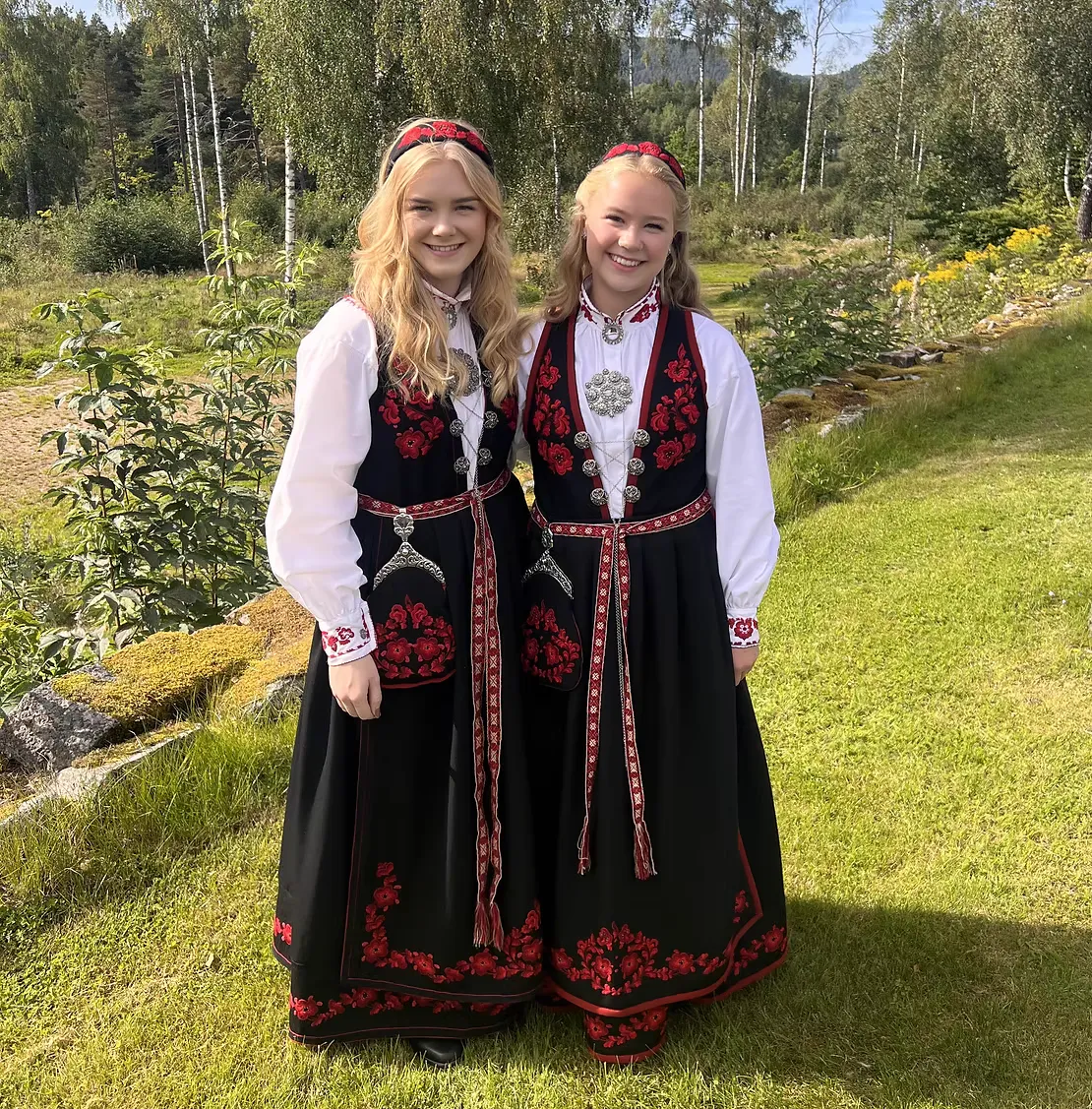
—Our bunads were embroidered by our grandfather, who is nearly 80 years old. That makes them even more beautiful and meaningful to us, say sisters Leah and Tine Sofie Thorstensen from Lunde, Telemark.
The Vest-Telemark Raudsaum Bunad
In many ways, it felt almost inevitable that their grandfather would be the one to embroider their bunads. The sisters wear Raudsaum bunads from Vest-Telemark, and their grandfather had already embroidered bunads for both their mother and their aunt.
—So it felt quite natural that he would make ours as well, explains the eldest sister, Tine Sofie.
—Mine was actually finished several years before my confirmation, Leah adds with a laugh.
A Bond Stitched with Time and Care
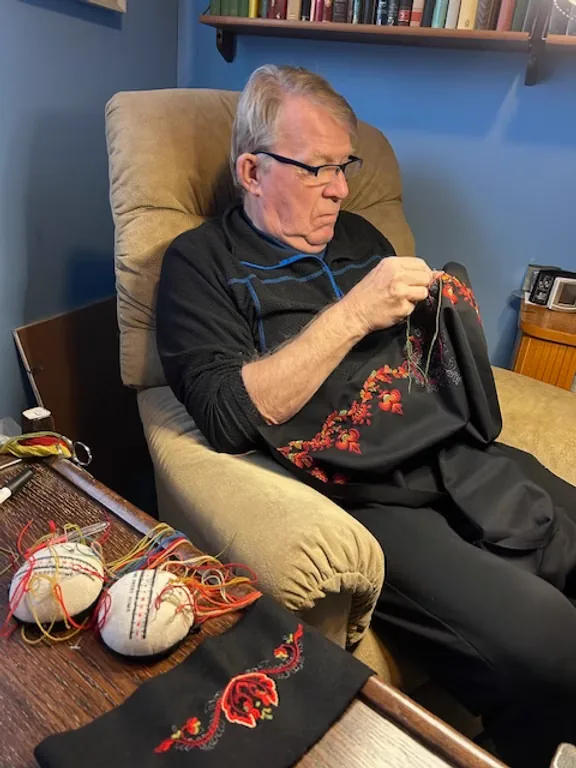
Their grandfather Alf, affectionately known as Beppe, has always played an important role in their lives. Wearing bunads he has embroidered carries a strong emotional value for both sisters.
—Embroidering a bunad like this is incredibly time-consuming, says Leah.
Tine Sofie agrees wholeheartedly.
—I feel incredibly privileged to have my bunad. For me, a bunad is something deeply sentimental. In the best possible way. And those feelings are only stronger knowing that it was made by someone so close to us.
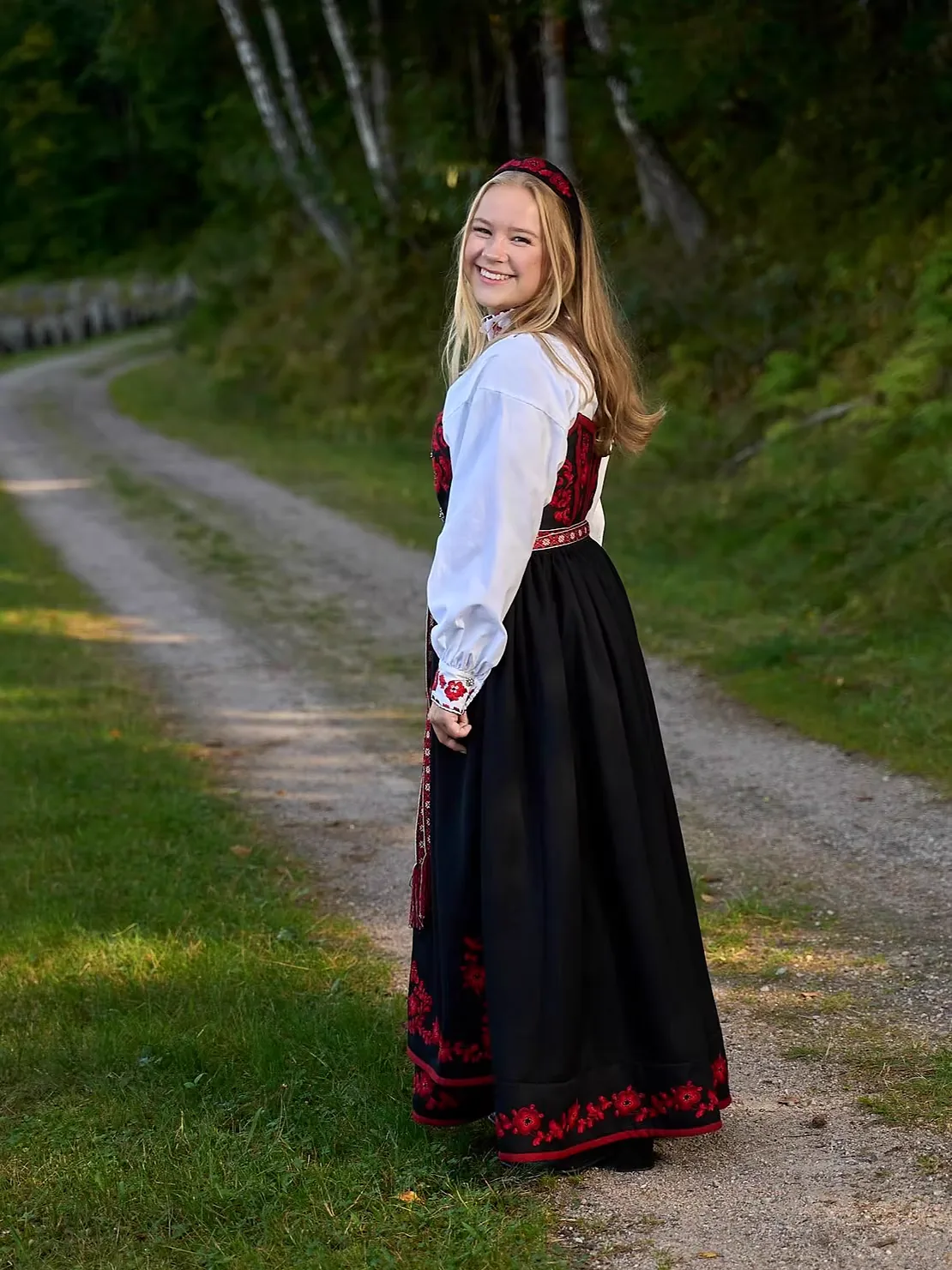
She describes Beppe as someone who has always been kind, caring, and deeply engaged.
—Simply put, he has been a great source of security throughout our lives.
A Living Tradition from Vest-Telemark
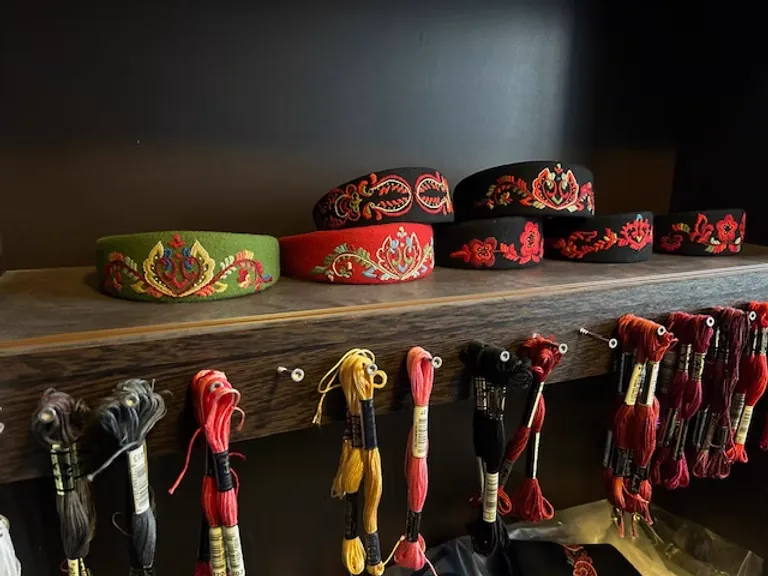
The sisters say they feel great when wearing their bunads. Raudsaum from Vest-Telemark is rooted in local traditions from the early 19th century. The bunad itself came into use in the early 1900s, influenced by the national romantic movement of the time.
Cultural figures such as (the one and only) Hulda Garborg played a key role in preserving and promoting traditional wool embroidery. In Vest-Telemark, skilled and dedicated women revived the old rose embroidery techniques. They were drawing inspiration from historic garments rather than copying them directly.
During the early 20th century, bunads appeared in many variations, with embroidery differing in both colour and pattern. Initially, only red hues were used. Thus the name raudsaum (red embroidery). Over time, additional colours were introduced, though red remains the most dominant.
In the 1950s, Telemark Husflidslag revised the bunad. As the older seamstresses passed on, the design gradually became more standardised. Even so, there is still great variation in embroidery patterns today.
Pride, Heritage, and Identity
—Before my confirmation, I was involved in choosing the colours and embroidery for my bunad, Tine Sofie explains.
—Our grandfather was part of the entire process. He’s incredibly proud when he sees us wearing them.
Both sisters see the bunad as an important part of Norway’s cultural heritage.
—I think it’s important to preserve Norwegian traditions, says Leah.
—And besides — it’s just so beautiful!
She recalls attending a christening where many of the guests were from Poland.
—They wanted photos of me in my bunad because they thought it was so stunning, she says, laughing.
For Tine Sofie, the bunad represents both personal and national identity.
—It shows where we come from. Of course, for me it’s a lasting memory of grandpa Beppe. But it’s also about being proud of our country. You feel incredibly elegant wearing a bunad, and I’m very aware of how privileged I am to have one. I know that the cost can be a challenge for many.
Leah nods in agreement.
—I feel incredibly lucky too. My bunad is simply the most beautiful thing I own. And I love it even more, knowing my grandpa did all the embroidery.
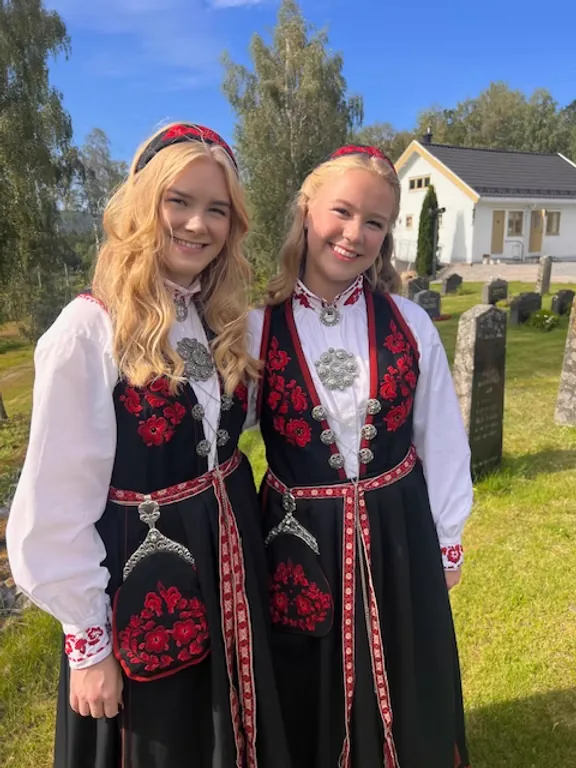
The Raudsaum bunad carries the embroidery, the time, and the love of those who make it. Discover more bunad traditions stitched by hand across Norway.
More bunad stories →